Infographic
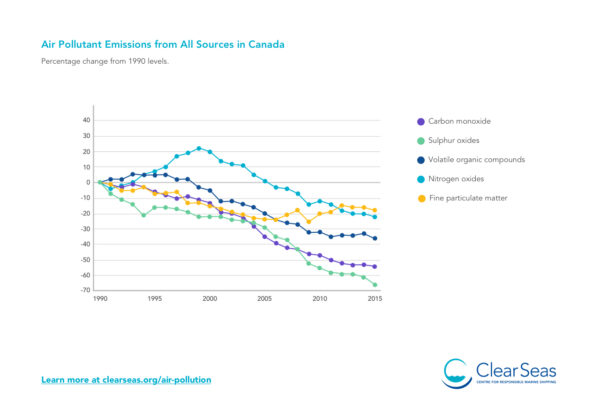
Air Pollutant Emissions from All Sources in Canada
Regulations have positively impacted air quality in Canada with the majority of air pollutants decreasing significantly since 1990.

Regulations have positively impacted air quality in Canada with the majority of air pollutants decreasing significantly since 1990.
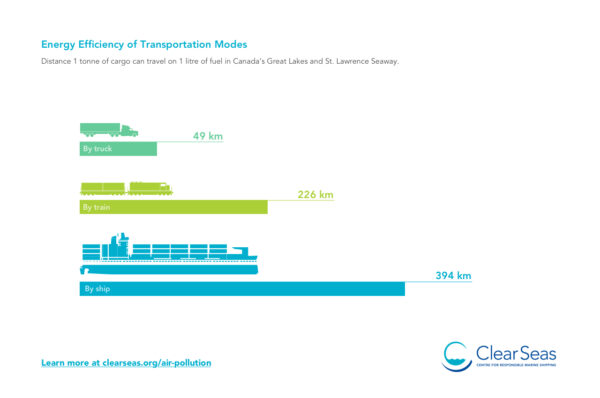
Distance 1 tonne of cargo can travel on 1 litre of fuel in Canada’s Great Lakes and St. Lawrence Seaway.
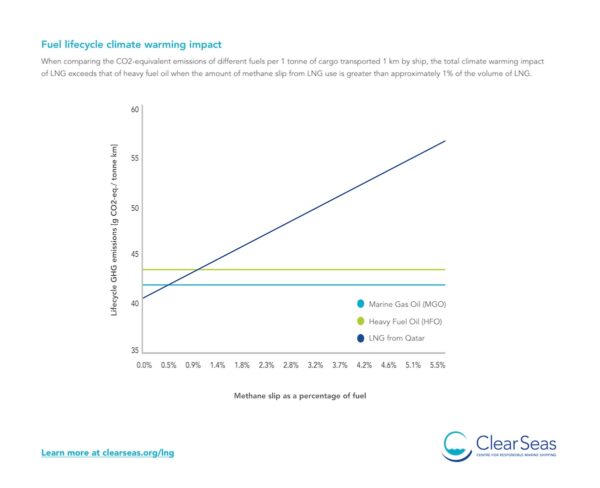
Fuel lifecycle climate warming impact. When comparing the CO2-equivalent emissions of different fuels per 1 tonne of cargo transported 1 km by ship, the climate warming of LNG exceeds that of heavy fuel oil when the amount of methane slip from LNG use is greater than approximately 1% of the volume of LNG.
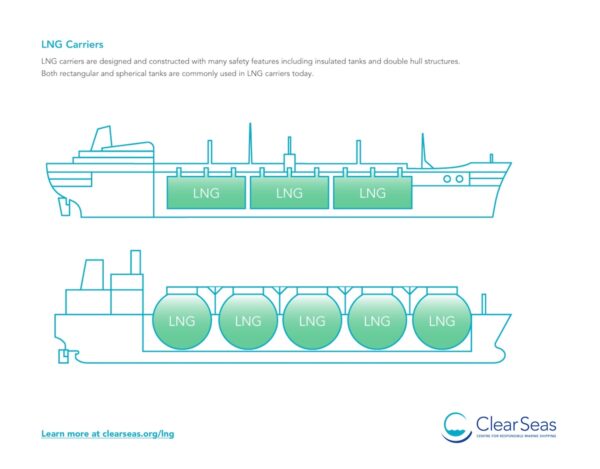
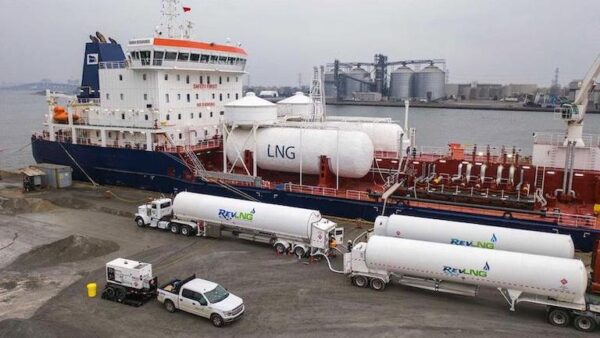
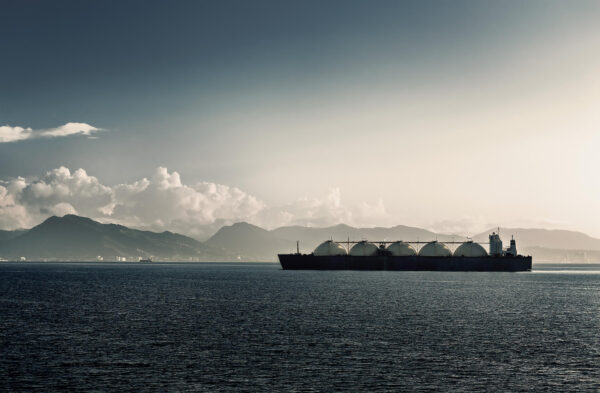
LNG & Marine Shipping: LNG ships are made with many safety features. These include insulated tanks and double hulls. The LNG tanks can be rectangular or round, spherical in modern LNG carriers.
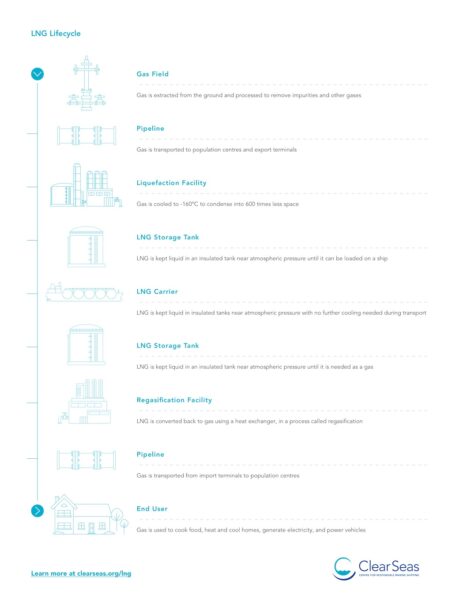
The lifecycle of LNG involves extraction from the ground, removal of impurities and gases and then it is shipped through a pipeline to a liquefaction facility and stored in an LNG tank for shipping. It’s processed upon arrival.
Learn more about LNG and marine shipping in Canadian waters. Discover the role of LNG in reducing commercial marine shipping’s contribution to world air pollution and measures to support the safe transport and use of LNG by ships.
Explore our resources related to marine shipping in Canada to inform and encourage conversations about the value Canadians gain from safe and sustainable marine shipping.
The 2010 Hazardous and Noxious Substances (HNS) Convention sets out a liability regime to compensate for damage caused by incidents involving HNS transported by sea.
Clear Seas partnered with the Angus Reid Institute again in 2018 to update the findings of a 2016 public opinion poll. Canadians view marine shipping as increasingly important to Canada.

Newsletter
Sign up to receive the Clear Seas quarterly newsletter.