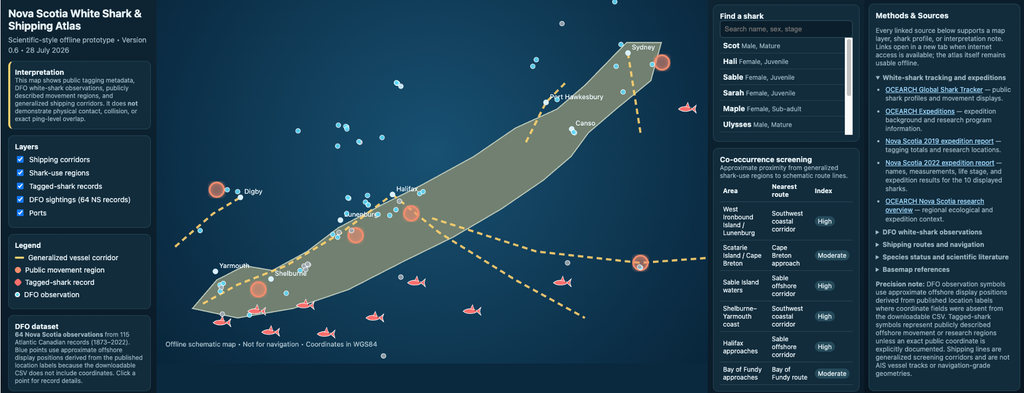
Destiney Brown, Métis, AB, undertook an investigation into the impact that pollution from shipping activity may have on sharks in Canadian waters, considering both toxins and underwater noise. She created a map of shark sightings in areas of shipping activity along the coast of Nova Scotia.
|
Getting your Trinity Audio player ready...
|
Author: Destiney Brown, Métis, AB, Indigenous Internship Program
In July 2026, a 4‑metre, 580‑kg male great white shark was found dead on a beach near Pictou, Nova Scotia, and a necropsy revealed no obvious cause of death.1
Could the cause be the result of marine shipping pollution?
It’s a serious possibility.
Sharks in Shipping Lanes
Shipping lanes along the Atlantic coast overlap with shark foraging areas, making noise and microplastic exposure particularly relevant.
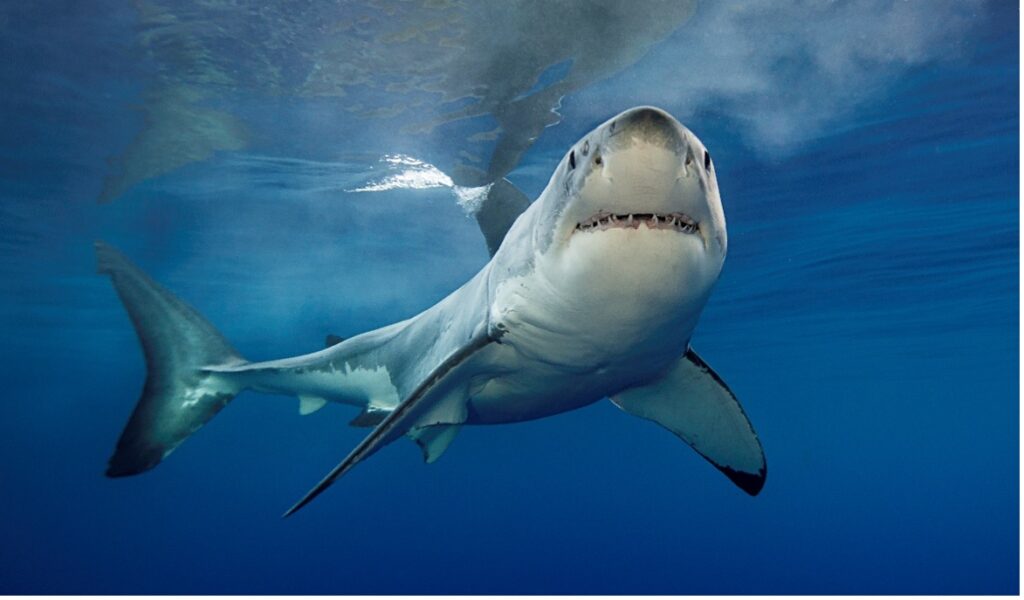
How are great white sharks affected by shipping pollution?
Sharks are affected by both chemicals present in the ocean and also by underwater noise.
Chemical contamination can include:
- Heavy Metals: Mercury, lead, and other heavy metals can impair neurological function, reduce growth rates, and compromise the immune system.
- Persistent Organic Pollutants (POPs): POPs like PCBs (polychlorinated biphenyls) and DDT (dichlorodiphenyltrichloroethane) are known endocrine disruptors, interfering with hormonal balance and reproductive success.
How does chemical contamination particularly affect sharks?
- Bioaccumulation refers to the accumulation of toxins within a single organism’s body over its lifetime. Great white sharks are long-lived animals, making them susceptible to accumulating significant levels of pollutants like heavy metals, pesticides, and persistent organic pollutants (POPs).
- Biomagnification describes the increasing concentration of toxins as you move up the food chain. Sharks, being apex predators, consume prey that already contain accumulated toxins. Each meal further concentrates these contaminants in their bodies, resulting in significantly higher levels than those found in lower trophic levels.
The effects of these accumulated toxins can be devastating, impacting their immune systems, reproductive capabilities, and neurological functions.2
Noise pollution from shipping can also negatively impact great white sharks for several reasons:
- Disrupted Communication: Noise pollution can interfere with their ability to communicate with each other, potentially affecting mating behaviors and social interactions.
- Masked Prey Sounds: Sharks rely on their hearing to detect prey. Excessive noise can mask the sounds of potential food sources, making it more difficult for them to hunt.
- Stress and Displacement: Exposure to loud noises can cause stress, leading sharks to avoid certain areas, potentially disrupting their migration patterns and access to important feeding grounds.
Author

Destiney Brown
Indigenous Intern
References
- CBC (28 July 2026). Large Great White Shark Found Dead on Nova Scotia Beach, Cause of Death a Mystery. ↩︎
- Gale, J. (1 March 2026). How are great white sharks affected by pollution? The Institute for Environmental Research and Education ↩︎