
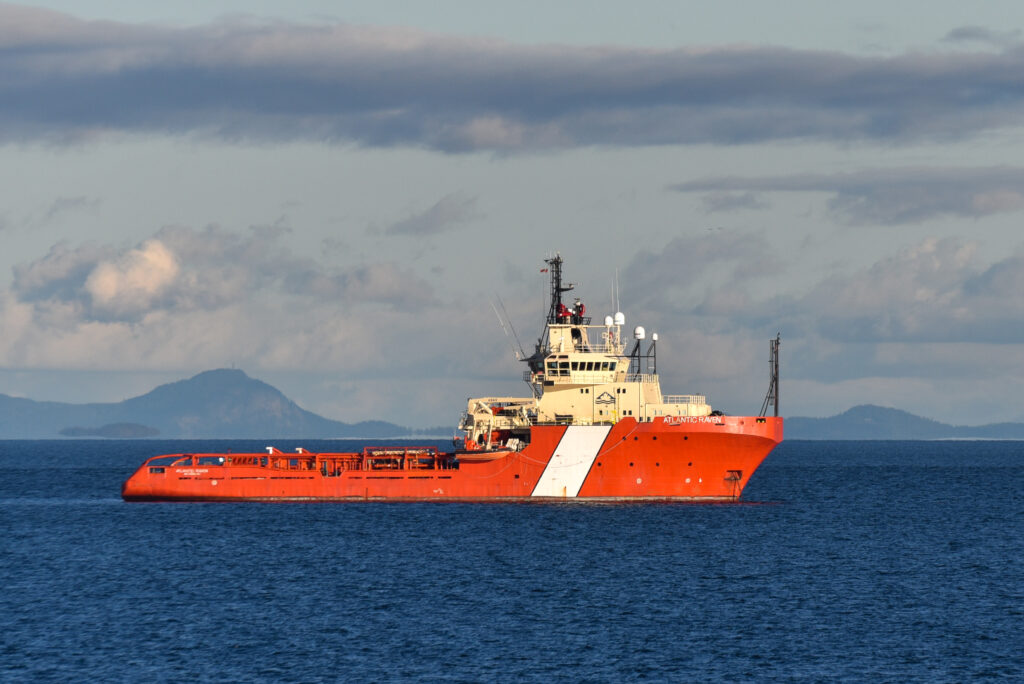
Understanding emergency towing capacity gaps in Canada
Summary
Emergency towing vessels play a critical role in preventing disabled ships from drifting aground, helping protect people, coastlines, marine ecosystems, and maritime trade. As vessel traffic grows and diversifies across Canada’s coasts and inland waterways, the availability of capable emergency towing vessels is an important part of marine safety and environmental protection.
This Clear Seas research project assesses the availability, capability, and market conditions of emergency towing vessels in Canadian waters. Building on earlier Clear Seas work focused on the Pacific Coast, this national study examines emergency towing capacity across Canada.
What it Matters
Emergency towing is a preventative safety measure. When a vessel becomes disabled, timely towing intervention can be the difference between a near miss and a grounding, spill, or other serious marine incident.
As Canada’s marine traffic continues to evolve, decision-makers need reliable information about where emergency towing capacity exists, what gaps remain, and which options could improve preparedness. This research provides a national picture of emergency towing vessel availability and highlights practical pathways for strengthening Canada’s marine safety system.
Overview
Canada has the longest coastline in the world and a marine shipping sector that includes a variety of vessel types. When a large vessel loses propulsion or steering, it can drift toward shore or other hazards. In these circumstances, a towing vessel with sufficient power, equipment, crew readiness, and proximity can prevent a serious incident.
This study investigates which vessels could provide emergency towing services in Canada, where they are located, how available they are in practice, and what commercial conditions would be required to secure reliable response capacity. The research combines a database of capable towing vessels with direct input from Canadian and international operators, industry experts, and response organizations.
About the Study
Purpose
The purpose of this study was to assess Canada’s emergency towing vessel capacity and potential future needs. This study was completed in 2026. The research focuses on vessels with high bollard pull, generally 150 tonnes or more, that could potentially respond to large vessels in distress under challenging conditions.
The study also considers broader factors that influence emergency response, including vessel availability, commercial contracts, regional coverage, firefighting capability, crew readiness, costs, and potential contracting models.
Research Approach
Clear Seas completed this national assessment by:
- Identifying Canadian and international towing operators with vessels capable of high-capacity emergency towing.
- Building a database of companies and vessels with sufficient bollard pull and relevant capabilities as of Fall 2025.
- Verifying vessel locations and operational profiles using publicly available marine traffic data and company information.
- Conducting interviews and requests for information with towing companies, response organizations, and other industry stakeholders.
- Analyzing regional gaps, cost barriers, and potential models for improving emergency towing coverage in Canada.
In This Report, You Will Learn
- What emergency towing vessels are and why they matter for marine safety.
- Which regions of Canada have capable towing vessels and where gaps remain.
- Potential models for dedicated, hybrid, and multi-purpose emergency towing coverage.
- Recommendations for strengthening Canada’s emergency towing capacity.
Project Benefits
- Supports evidence-based decisions about emergency towing coverage in Canada.
- Identifies regional gaps in towing capacity and availability.
- Explores contracting and service models that could improve emergency response readiness.
- Helps governments, industry, and coastal communities better understand options to reduce risks from drifting vessels.
Read the report
Key Findings
1. Capable vessels exist, but availability is limited
The study identified vessels in or near Canadian waters with the technical capability to support emergency towing. However, many of these vessels were already committed to offshore energy, escort, spill response, or other commercial operations. Their physical presence in Canadian waters did not mean they could be relied on in an emergency.
2. “Tugs of opportunity” are not a viable emergency response strategy
Industry participants emphasized that vessels working nearby usually cannot be safely diverted from existing assignments. Depending on commercial commitments, distance, weather, crew readiness, and equipment, relying on tugs of opportunity can leave significant uncertainty in emergency response planning.
3. Regional coverage is uneven
Some emergency towing capacity exists on the Pacific Coast, including dedicated and multi-purpose vessels. However, the study identified more pronounced gaps in the Atlantic and Arctic regions, where capable and available vessels were limited. The Great Lakes and St. Lawrence also face challenges related to high traffic volumes and the availability of high-bollard-pull assets.
4. Long-term contracts are essential to secure reliable capacity
Large towing vessels are expensive to operate. Operators indicated that reliable, multi-year contracts would be needed to dedicate vessels to emergency towing service. Short-term arrangements are generally less attractive and can come with higher costs because vessel owners need to recover their investment and account for opportunity costs.
5. Hybrid and multi-purpose models may help reduce costs
The research identifies potential models where vessels continue commercial work while maintaining defined standby obligations for emergency response. Multi-purpose vessels, offshore supply vessels, escort tugs, spill response vessels, and suitably equipped icebreakers could all play complementary roles in a broader national towing strategy.
6. Existing Canadian Coast Guard icebreakers may present an opportunity
The report notes that some Canadian Coast Guard icebreakers were originally built as offshore towing and anchor-handling vessels. With appropriate modifications and access to trained crews, these vessels could potentially help fill regional gaps by supporting emergency towing in Arctic and Atlantic waters.
Trending

Research Team

Clara Kaufmann
Research Manager, Clear Seas

Tessa Coulthard
Research Lead, Clear Seas

Paul Blomerus
Chief Executive Officer, Clear Seas