Microsite
Hydrogen & Marine Shipping
The maritime sector is looking for alternative fuels to decarbonize shipping activity. Do hydrogen and hydrogen-derived fuels like methanol and ammonia offer a net-zero carbon solution?

The maritime sector is looking for alternative fuels to decarbonize shipping activity. Do hydrogen and hydrogen-derived fuels like methanol and ammonia offer a net-zero carbon solution?
Clear Seas convenes a roundtable to gather perspectives on the use of LNG as fuel for marine shipping in Canada’s north.
Efforts to reduce emissions from ships – including stricter regulations about marine fuels’ allowable level of sulphur – are curbing the use of heavy fuel oil (HFO) in the marine shipping industry.
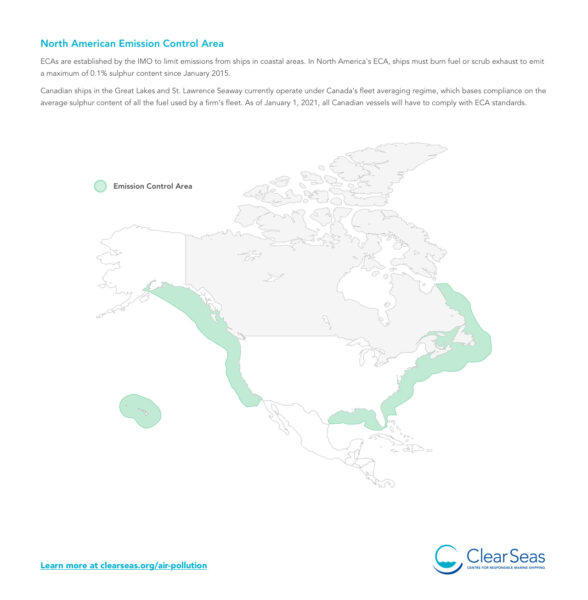
ECAs are established by the IMO to limit emissions from ships in coastal areas. In North America’s ECA, ships must burn fuel or scrub exhaust to emit a maximum of 0.1% sulphur content since January 2015.
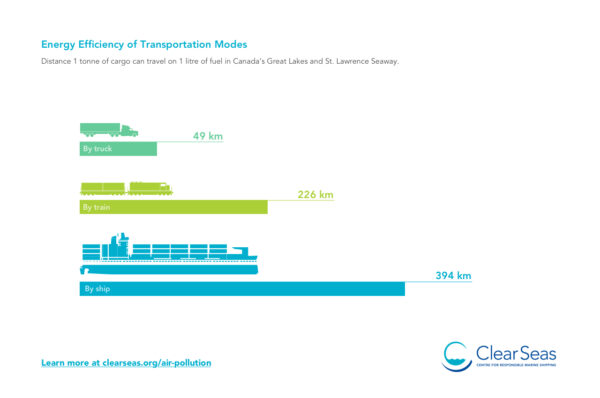
Distance 1 tonne of cargo can travel on 1 litre of fuel in Canada’s Great Lakes and St. Lawrence Seaway.
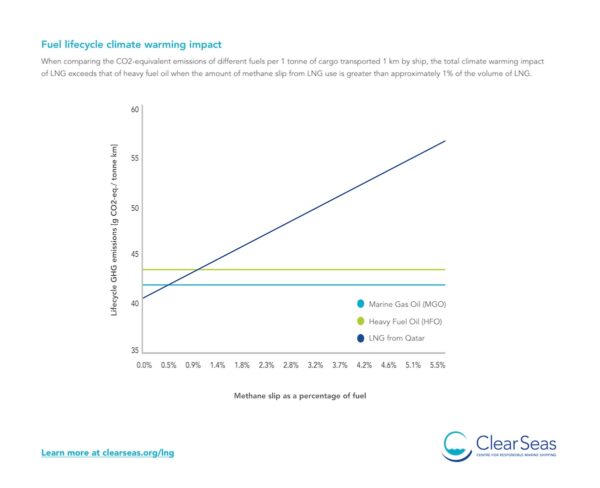
Fuel lifecycle climate warming impact. When comparing the CO2-equivalent emissions of different fuels per 1 tonne of cargo transported 1 km by ship, the climate warming of LNG exceeds that of heavy fuel oil when the amount of methane slip from LNG use is greater than approximately 1% of the volume of LNG.
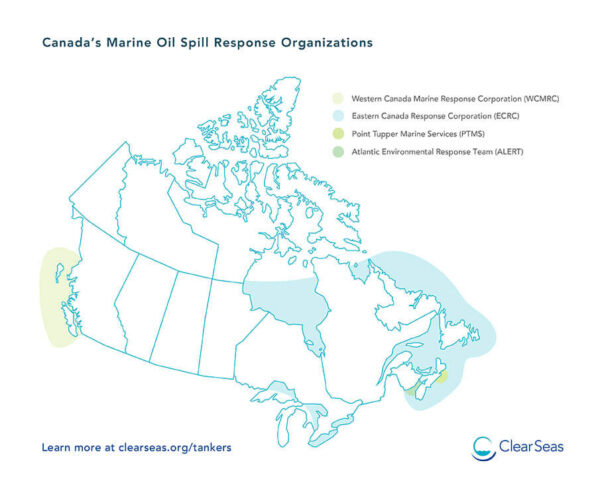
Canada has four marine oil spill response organizations for its oceans and waterways including the Western Canadian Marine Response Organization, the Eastern Canadian Marine Response Organization, Point Tupper Marine Services and the Atlantic Environmental Response Team.

Newsletter
Sign up to receive the Clear Seas quarterly newsletter.