“Maritime shipping is exactly the kind of situation decision analysis was developed for—it’s complex, uncertain, high-stakes, and deeply interconnected.” -Dr. Simone Philpot
|
Getting your Trinity Audio player ready...
|
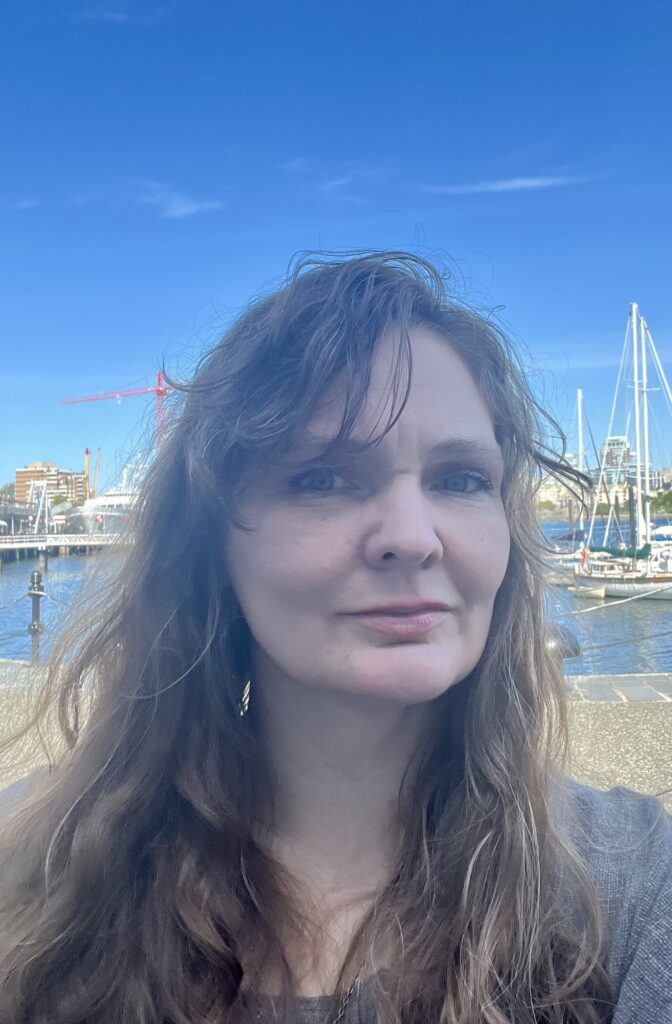
Dr. Simone Philpot is a decision scientist whose research focuses on complex systems thinking and formal decision analysis. As a postdoctoral researcher at the University of British Columbia, she worked with Clear Seas on the Pathways to Zero Impact Shipping project, helping develop decision-support approaches to address the environmental impacts of maritime shipping. Simone is now a researcher at the Cascade Institute in Victoria, BC, where she applies complexity science to large-scale societal challenges.
Interview
Tell us about the Pathways project and what you worked on.
The Pathways project came from the idea that maritime shipping has a wide range of environmental and social impacts, and that we often deal with those impacts one at a time. When we regulate shipping or adopt new technologies, that narrow focus can be a problem because technologies and policies almost always involve trade-offs.
We wanted to develop formal decision support that would help decision-makers take more of a systems approach. Instead of looking at a single environmental impact in isolation, the idea was to capture trade-offs and co-benefits across multiple impacts at once.
A technology might not perform best on one metric, but perform well across the board, and that should matter when comparing alternatives. Decision analysis gives you a disciplined, transparent way to consider those trade-offs.
How do you hope this research will be used?
Part of my hope is simply to expand awareness of what decision analysis can offer maritime shipping. One finding from the Ship Technology report was that formal decision analysis techniques aren’t being used to the extent they could be, even though maritime shipping is exactly the kind of decision environment they were designed for.
I’d also love to see the tools we developed used or built upon. Beyond any specific tool, I hope the project helps socialize the value of systems thinking. People in the maritime shipping industry already tend to think in systems, often because of experience rather than formal training. Our work gives them ways to formalize that perspective for better decision-making.
The project included two very different case studies. Why was that important?
Maritime shipping is incredibly diverse, with many stakeholders and contexts. Decision-support systems need to be context-sensitive, but they also require significant investment, so there’s always a tension between being specific and being generalizable.
Working with very different stakeholders allowed us to test how flexible our methods were.
One case study was with the Canadian Coast Guard and focused on icebreaker vessel design. That’s a very concrete problem: do you choose diesel-electric or hybrid systems, how do design choices affect environmental outcomes, and what trade-offs are involved?
Icebreakers are fascinating because their design choices can have consequences beyond the vessel itself. They may have significant direct environmental impacts, but they also reduce impacts for vessels that follow behind them because those ships don’t have to work as hard.
That made icebreakers a powerful case study for thinking about impacts at the system level.
What about the second case study?
The second case study was with the National Research Council of Canada and focused on decisions about where to invest in research. That’s a much less tangible kind of decision, but it’s just as important.
We worked with researchers to understand how they define the value of their work and what outcomes matter most. From that, we developed performance indicators that could be used to compare research projects across multiple criteria.
Rather than evaluating one metric at a time, we used decision analysis to look at how projects perform across a whole set of objectives.
This was your first time working in maritime shipping. How did it compare to your previous research?
I’ve always been interested in complicated decision environments and leverage points in society. Earlier in my career, I worked on water management issues, such as groundwater conflicts, transboundary water sharing, and aggregate mining.
There are strong parallels with maritime shipping. In groundwater and deep-sea environments, it can be very hard to build trust because the systems are difficult to observe and understand. People struggle to agree on what the impacts will be, which makes decision-making and conflict resolution difficult.
One thing that surprised me is that I didn’t realize I was moving into transportation research at all. I thought I was doing water research, and then slowly it dawned on me that I had become a transportation researcher. Coming in with that different perspective was actually a strength.
What are you working on now, and how did this project help lead you there?
I’m now a researcher at the Cascade Institute, a think-and-do tank focused on complexity science, systems theory, and global risks. We work on issues like energy transitions, polycrisis, and long-term societal resilience.
The Clear Seas work really helped prepare me for this role. It gave me the opportunity to test my methods in a highly complex system and showed me how important maritime shipping can be as a leverage point in society.
The experience, collaborations, and perspectives I gained through Clear Seas also allowed me to bring a maritime and ocean perspective into the work at the Cascade Institute, which wasn’t something they had focused on before.
To learn more about this work, visit the Pathways to Zero Impact Shipping project page.