Exploring interrelationships between ship underwater radiated noise (URN) emissions and greenhouse gas (GHG) emissions and insights into energy efficiency through modelling.
Join the Canadian Marine Shipping Risk Forum community of practice for another “Beyond the Horizon” webinar to explore how technology can be applied to mitigate shipping risk: Exploring interrelationships between ship underwater radiated noise (URN) emissions and greenhouse gas (GHG) emissions and insights into energy efficiency through modelling.
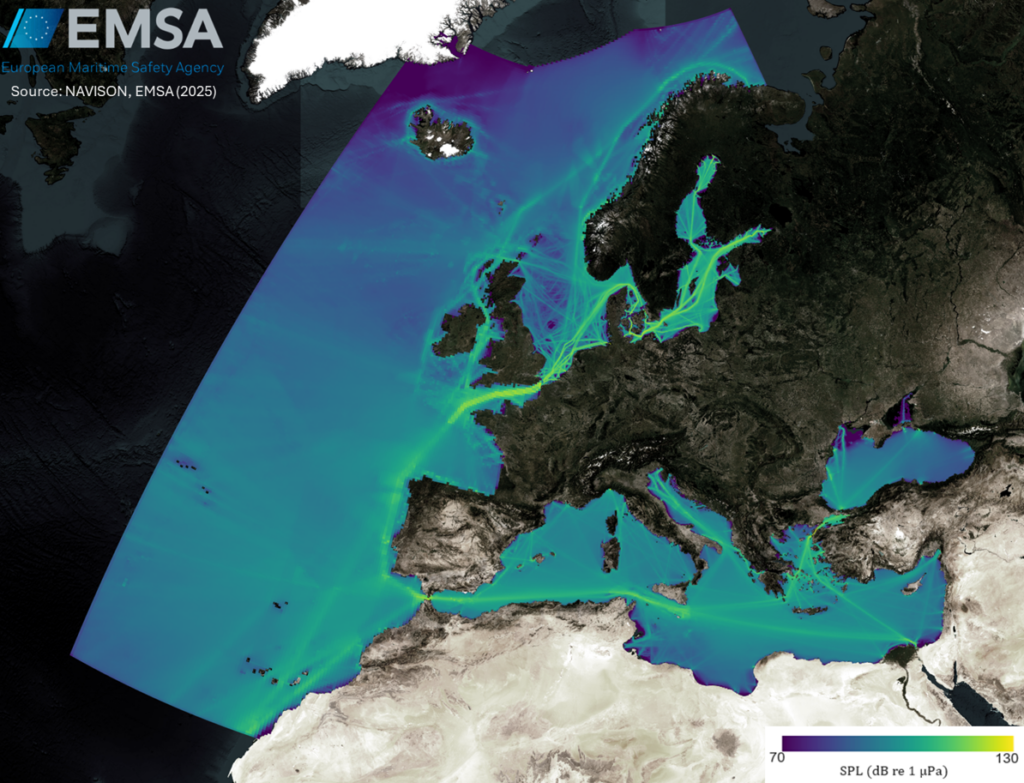
Presented by Alex MacGillivray and Michael Ainslie of JASCO Applied Sciences Ltd., this webinar will show how modelling and measurements of ships’ underwater radiated noise are interconnected and dive into how modelling can be used as a tool to investigate future shipping scenarios based on the NAVISON project case study.
NAVISON yielded forecast sound maps to predict the future impact of maritime technology and operational measures on the mitigation of underwater noise caused by shipping for 2030, 2040, and 2050, under scenarios that consider the gradual adoption within the industry of combinations of measures ranging from improved hull design to speed optimization. Some of the examined measures are part of the European Union’s current roadmap for reduction of greenhouse gases (GHG) emissions, others are targeted specifically to the reduction of radiated noise.
The study evidences that GHG reduction measures by themselves may lead to a worsening of underwater radiated noise for certain vessel categories and acoustic frequencies, and suggests that a coordinated strategy aimed at both environmental goals must be followed to achieve desired outcomes.