
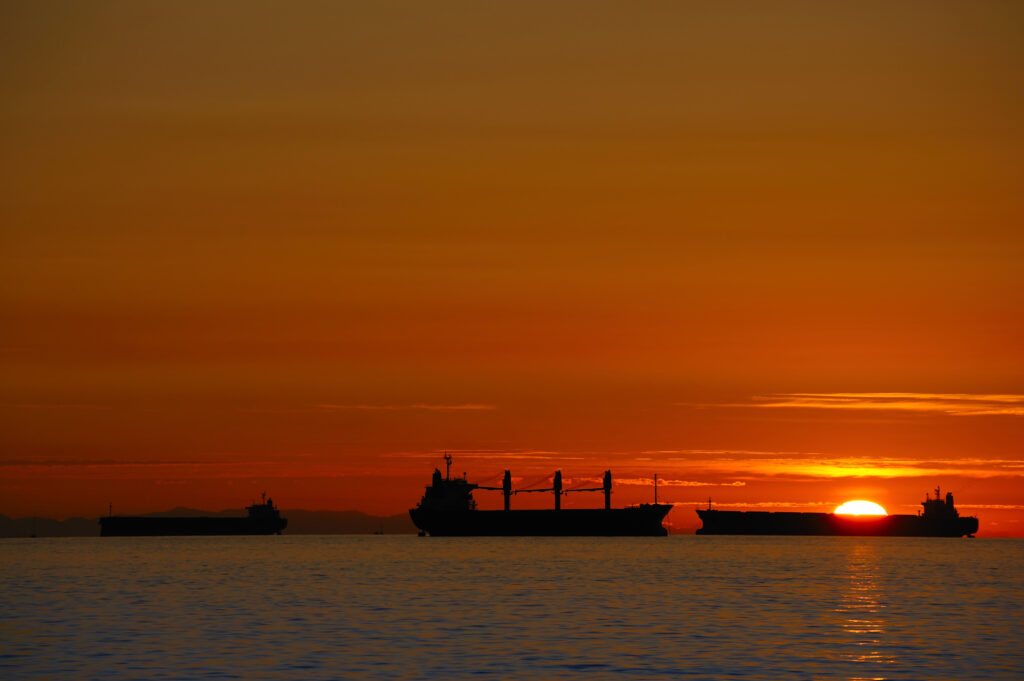
Understanding the systems, drivers, and disruptions shaping commercial anchorage use in the Canadian waters of the Salish Sea
Project Summary
Clear Seas examined commercial anchorage use in the Canadian waters of the Salish Sea between 2016 and 2025, using the Pacific Pilotage Authority’s Vessel Movement Data. The research looks at where anchorage use has changed, which vessel types and commodities are driving demand, and how anchorage patterns reflect broader shocks and pressures in the regional transportation system.
In this report, you will learn about
- How commercial anchorage use in the Canadian waters of the Salish Sea changed between 2016 and 2025, and why traffic levels alone do not explain these changes.
- Which anchorage groups, vessel types, commodities, terminal patterns, and supply chain disruptions have contributed most to anchorage pressure.
- Why managing anchorage use requires stronger coordination across ports, terminals, railway operators, vessel operators, pilots, and regulators.
Read the report
Key Takeaways
Anchorage use increased even as vessel traffic declined
Between 2016 and 2023, total time spent at anchor in the Canadian waters of the Salish Sea increased by 90%, while commercial vessel traffic fell by 14%. This suggests that recent anchorage pressure has been driven more by longer and more frequent delays than by traffic growth alone.
The Gulf Islands absorbed much of the increase
The Gulf Islands anchorage group has taken on much of the additional anchorage demand over the past decade, with anchorage use growing by 470% between 2016 and 2025. These anchorages are used mainly by bulk carriers and function as a longer-term waiting area when Vancouver-area anchorages are under pressure. Use is highly seasonal, with much higher activity in winter and little to no use during the summer.
Bulk carriers drive most anchorage demand
Bulk carriers account for the vast majority of commercial anchorage use in the Canadian waters of the Salish Sea. In 2025, bulk carrier trips that anchored spent an average of 7.7 days at anchor. Most of this waiting occurred before the vessel’s first terminal visit, showing that pre-terminal delays are the largest component of bulk carrier anchorage use.
Grain and coal account for most time at anchor
Bulk carriers carrying grain and coal accounted for 70% of all time spent at anchor in the Canadian waters of the Salish Sea in 2025. Grain vessels anchor frequently and often wait for extended periods, partly because grain loading is sensitive to rainfall. Coal-related anchorage use rose sharply during major supply chain disruptions in 2022 and 2023.
Tanker traffic rose sharply, but tanker anchorage use grew more modestly
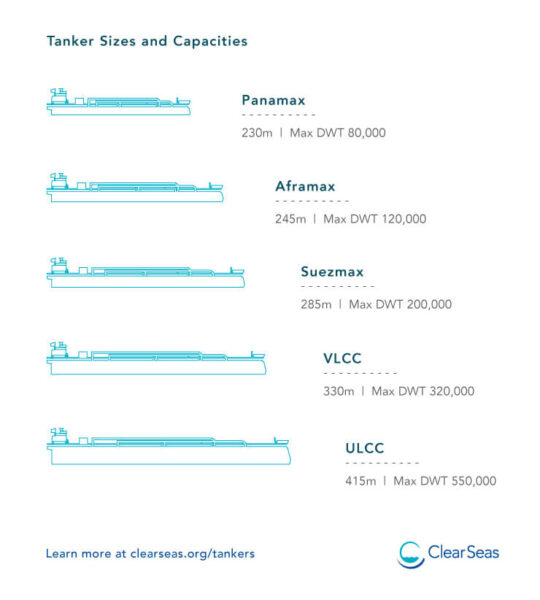
Tanker traffic increased in 2024 and 2025 following the completion of the Trans Mountain Expansion project. However, tanker anchorage use grew more modestly because Trans Mountain tankers generally anchor for shorter periods than other tankers. In 2025, Trans Mountain tankers that anchored averaged 1.4 days at anchor, compared with 1.9 days for other tankers.
Container anchorage use remains above pre-disruption levels
Container anchorage use surged during the COVID-19 supply chain crunch and the 2021 Pacific Northwest floods. Although container anchorage use has declined since the peak in 2021 and 2022, it remained more than 260% above 2019 levels in 2025.
Anchorage use is a symptom of wider system performance
Anchorage demand is shaped by terminal readiness, cargo availability, rail performance, vessel scheduling, pilotage, and anchorage allocation. Reducing pressure on the anchorage system will depend on improving the movement of vessels, cargo, and information across the wider marine transportation network.
Trending
Research Team

Lee Barrett-Lennard
Research Lead, Clear Seas

Rachel Stewart-Dziama
Research Lead, Clear Seas

Eitan Klinger
Research Associate, Clear Seas

Paul Blomerus
Chief Executive Officer, Clear Seas