
Invasive Species &
Marine Shipping
#invasivespecies #ballastwater #biofouling #clearfacts
Commercial vessels transiting the world’s oceans from port to port can transport as much as 90% of the world’s goods and products[1] – and carry more than just cargo.
Without careful measures, ships can unintentionally transport foreign species to new environments – where without natural predators, these “invasive” species can threaten local ecosystems and damage the environment, the economy and human health.
This site, created by Clear Seas Centre for Responsible Marine Shipping, provides objective information about invasive species in Canadian waters – how they get here, what threats they pose and how they are countered – to encourage informed conversations about these issues.
Invasive Species in Canadian Waters
Canada is a maritime trading nation. Every day, commercial vessels from all over the world transit our coastal waters, rivers and lakes carrying goods to and from the country. Each of these vessels has the potential to cause harm by unintentionally transferring invasive species.
Today, the spread of invasive species is considered one of the key threats to natural biodiversity in aquatic environments – second only to habitat destruction. The costs to repair damage by and manage the impacts of invasive species are significant and increasing.[2] Globally, it is difficult to estimate the financial damage from invasive species but one study concluded that invasive fish have had “pernicious ecological and economic impacts on both aquatic ecosystems and human societies.”[3] A comprehensive database[4] of known costs up to 2017 indicates global costs of US$1.28 trillion for all reported terrestrial and aquatic invasive species, with ongoing costs to Canada of at least $580 million per year from only aquatic invasive species.[5]
As the volume of vessel traffic in Canadian waters continues to grow – particularly in sensitive areas such as the Arctic – there is an increasing need to understand the devastating impacts of these foreign species and limit their introduction and spread.
Learn more: The Government of Canada’s approach to managing aquatic invasive species
- So where do invasive species come from?
- How do they get to Canada?
- Why do they cause so much damage once they arrive and what is being done to stop the spread of these invaders and limit their negative impacts?
What Makes a Species “Invasive”?
Species have long used the world’s oceans and waterways to make their way around the planet. These movements used to be relatively slow and infrequent, driven mainly by natural processes like currents and winds or hitching a ride on a whale or a log.
The explosion of human activities on the seas – most notably, commercial marine shipping – has vastly increased the opportunities for species to take refuge on or inside vessels and travel the world.
When a species – whether animal, plant or micro-organism – arrives in a new aquatic habitat, several outcomes are possible. It can:
- Find its new surroundings uninhabitable and die off;
- Survive in low numbers with little to no impact; or
- Thrive and its population can grow and take over – harming its new environment in a variety of ways.
Learn more: How to identify an aquatic invasive species
When a new species flourishes and begins changing or damaging its new environment, it is referred to as “invasive”. Once established in a new environment, invasive species can cause damage to Canada’s ecology, economy, and human well-being in a number of ways. For example, they can:
- Reduce biodiversity and threaten existing species by introducing diseases, consuming the species or its food sources, or taking over habitat;
- Degrade water quality and habitats;
- Damage infrastructure such as piers as well as power, water and navigation systems;
- Erode shorelines;
- Reduce waterfront property values;
- Reduce opportunities for recreation and tourism;
- Reduce productivity in resource sectors such as fisheries and aquaculture;
- Harm Indigenous cultures and traditional food sources;
- Lead to trade restrictions.
Impact of Invasive Species Worldwide
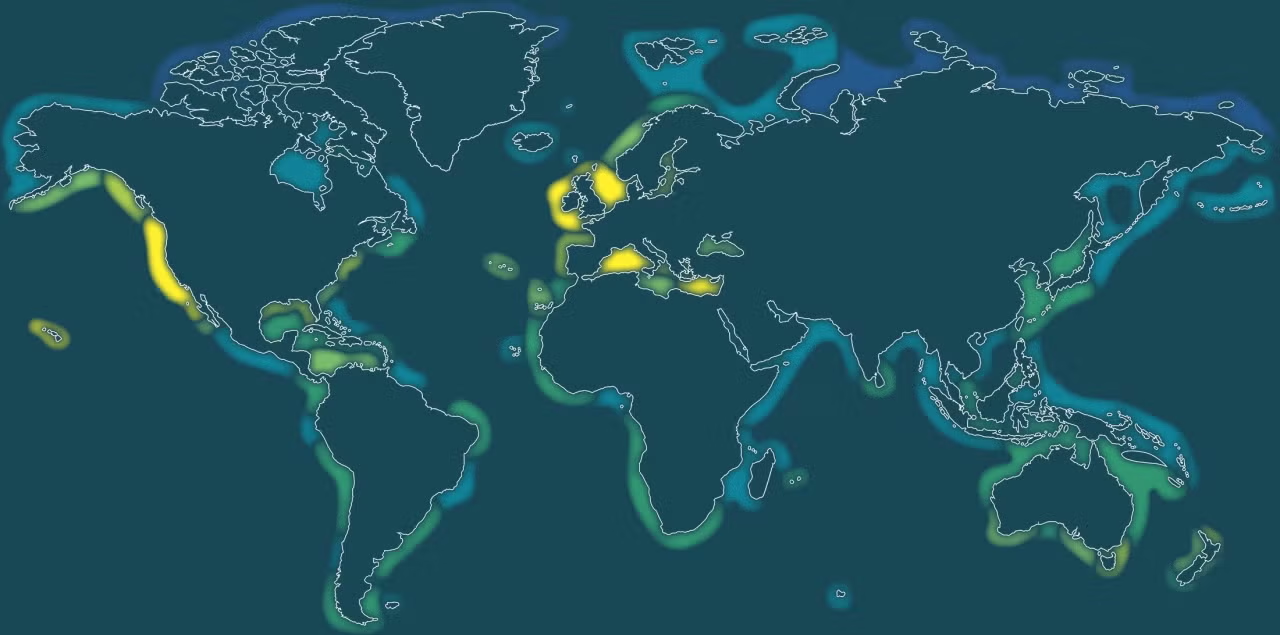
More than 80% of the world’s marine ecoregions have been impacted by at least one harmful invasive species. Some regions have been impacted by many.
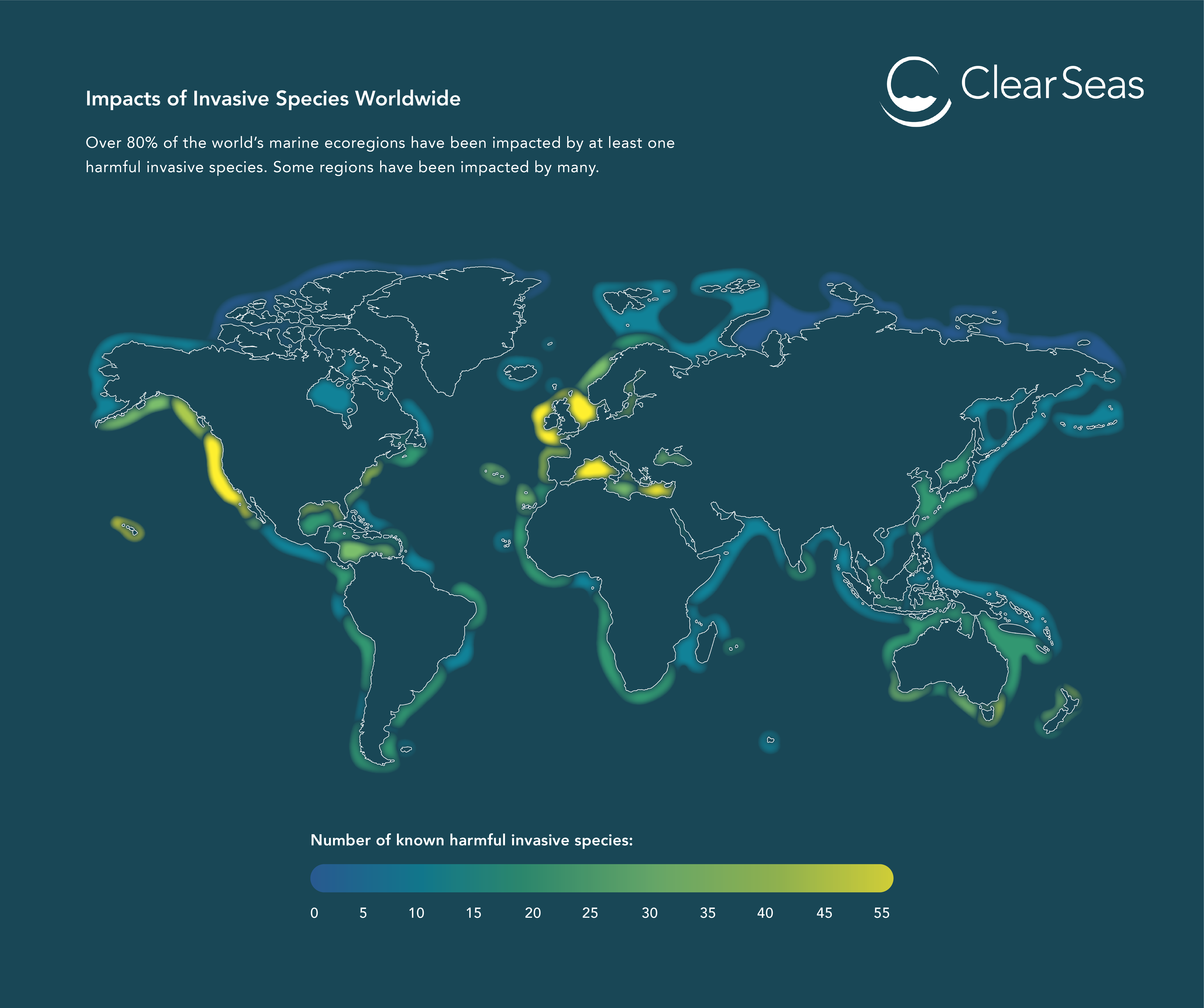
Number of known harmful invasive species:

How Do Species Invade?
Invasive species can be introduced to new aquatic environments in a number of different ways including:

Natural dispersal through ocean currents and water movement

Human release of live species (bait, pets) into the environment, either accidental or otherwise

Building of canals and water diversions
Recreational boating activity

Commercial marine shipping
Commercial marine shipping is considered to be the largest source of new and significant aquatic species invasions worldwide.[7]
Ships move species from port to port via two main routes:
Ballast Water
Ballast water is drawn from a vessel’s surrounding environment and stored in specialized tanks. Ballast is critical for maintaining weight and providing stability during the voyage and as a ship loads and unloads its cargo. Aquatic species can be swept up in ballast water when it is pumped into ballast tanks and released into a new environment when the vessel takes on cargo in a new port.

Propeller
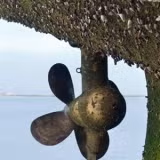
Bilge Keel
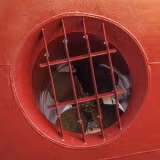
Sea Chest
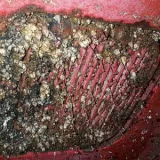
Bow Thrusters
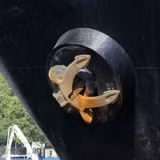
Anchor
Biofouling
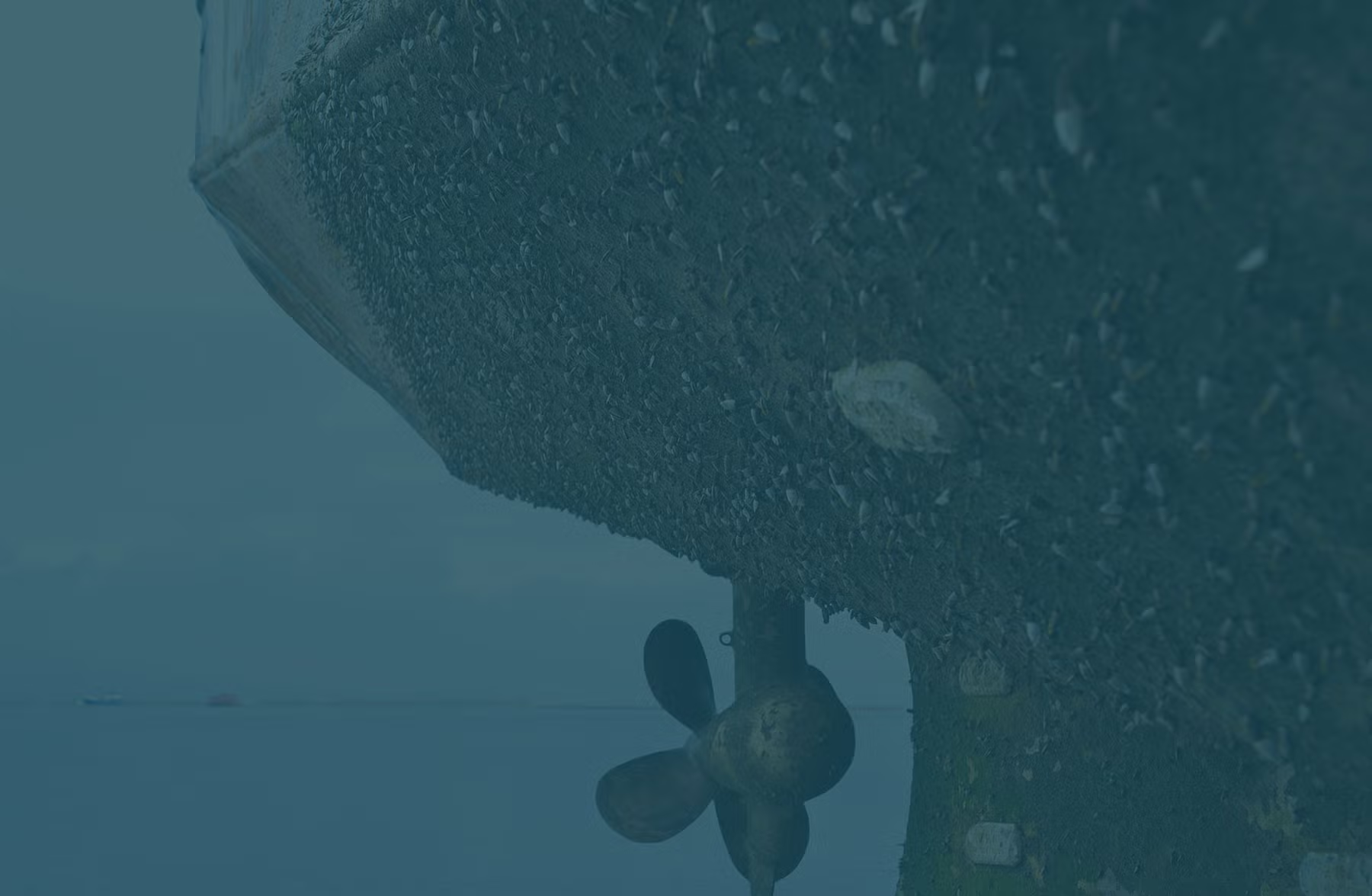
Live organisms ranging from algae and microbes to mussels and barnacles can attach to ships’ hulls in a process known as “hull fouling” or “biofouling”. Species attached to vessel hulls can be transported long distances where they can then dislodge and reproduce in a new environment. In addition to the flat surfaces of a vessel’s hull, there are several underwater niches on a ship where organisms can collect, including bow thrusters, rudders, propellers, intakes, and sea chests (protected cavities built into the hull of a vessel, covered with metal grates and exposed to a constant flow of seawater).
Many aquatic species have been introduced worldwide through the discharge of ballast water and through biofouling[13]. Both of these routes are important (and are not the only way invasive species can travel), but some species and regions seem to experience more invasions from one route than the other.
In New Zealand, biofouling was found to be responsible for about 70% of aquatic invasive species, compared to just 3% from ballast water.
In U.S. waters, hull biofouling accounted for about 35% of aquatic invasive species compared to 20% from ballast water.
Common Invasive Species in Canadian Waters
All of Canada’s coastlines and waterways have been affected by invasive species that arrived by ship. To date, the most well-known impacts have occurred in the Great Lakes. In a 2019 report, the ecosystem health of the Great Lakes was assessed as poor and deteriorating with reference to invasive species.[16]
Approximately 30% of the estimated 185 aquatic non-native species established in the Great Lakes are thought to have been introduced by ship ballast water.[17][18] These species have caused significant and ongoing economic and ecological harm to the region.
Learn more: Database of economic costs of worldwide biologic invasions
The Atlantic and Pacific coasts have also suffered from invasive species with damage to Indigenous and coastal communities, particularly fisheries and aquaculture industries in these regions.
Looking to the future, higher temperatures and melting sea ice are opening shipping corridors in the Canadian Arctic, increasing the risk that species from warmer climates will be carried into this remote and sensitive region and cause damage.

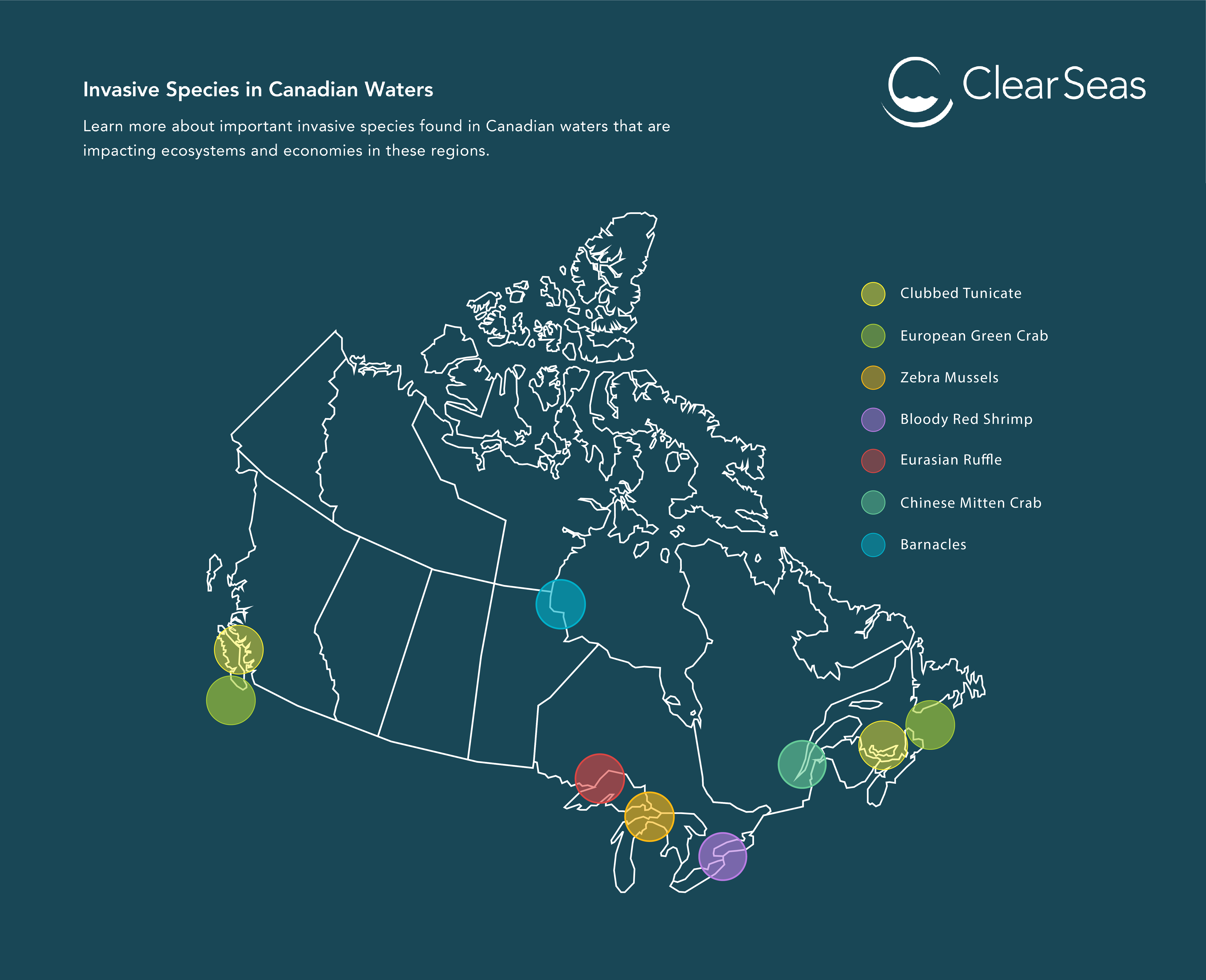
Invasive Species in Canadian Waters
Learn more about how invasive species are impacting ecosystems and economies in Canadian waters through examples of invasives of concern in different regions.[19]
Reducing Species Invasions Caused by Shipping
Actions by vessel owners and operators reduce the likelihood that invasive species will be transferred by ship ballast water or biofouling. These actions are required by regulations or informed by guidelines in Canada and internationally.
The International Convention for the Control and Management of Ships’ Ballast Water and Sediments was first established by the International Maritime Organization (IMO) in 2004 and entered into force in 2017.
In Canada, regulations have been in place through the Canada Shipping Act, 2001 – known as the Ballast Water Control and Management Regulations – since 2006 to limit the spread of invasive species. In 2021, Canada adopted new Ballast Water Regulations to replace the previous regulations and impose more stringent requirements on ships and increase compatibility between the Canadian and American ballast water regimes.[34]
Preventing Transfer of Invasive Species through Ballast Water
Vessel owners and operators are required to prevent the transfer of invasive species by either treating or exchanging their ballast water:
Treatment
Ballast water can be treated with mechanical, physical, chemical or biological processes such as filters, chemicals, ultraviolet light, electrolysis, and sounds either onboard ship or on shore to destroy or otherwise render inert any organisms contained in the ballast water.[35]
Exchange
Ballast water can be exchanged by replacing coastal or fresh water for open-ocean water during the voyage to limit the transfer of species from one coastal ecosystem to another.
The regulations apply to Canadian vessels everywhere and foreign vessels operating in Canadian waters that are designed to carry ballast water. Under these regulations, ships are required to:
- Develop and implement a ballast water management plan
- Obtain a certificate attesting that their ballast management plan meets the Convention’s requirements
- Keep records of ballast water regulations and be subject to inspections to verify compliance with the regulations
- Comply with a performance standard (regulation D-2 of the Convention) to limit the number of organisms discharged by 2024 (or 2030 for some domestic and Great Lakes ships).
To date, the measures for ballast water management have proven effective – no new invasive species attributed to ballast water have been reported in the Great Lakes since these measures were introduced in 2006.[36] The water treatment required under the new Ballast Water Regulations will help prevent the spread of invasive species within Canada as well as the transfer of species from Canada to other regions, protecting global biodiversity.
Preventing Transfer of Invasive Species through Biofouling
Innovative approaches are being applied by vessel owners and operators to reduce invasive species transport through biofouling.
Anti-fouling Hull Coating
Application of an anti-fouling paint or other non-toxic coating to exposed, submerged surfaces is the primary means of inhibiting growth of marine life. Prior to the International Convention on the Control of Harmful Anti-fouling Systems on Ships, in force in 2008, ship coatings had toxic components that leached heavy metals into the ocean.
Biofouling Resistant Materials
Materials are selected for piping and other unpainted components to resist marine life growth.
Marine Growth Prevention Systems
In internal or niche areas such as sea chests and seawater cooling systems marine life is prevented from settling by the use of electrolysis through copper, aluminum and iron anodes.[38]
Hull Cleaning
Removing marine organisms from the hull can occur when the ship is in the water (at berth or underway) or less frequently when out of the water (in dry dock). The required frequency of cleaning depends on the rate of marine life growth, which is affected by travel speed, time spent at anchor or in port, and the temperature and salinity of the water the ship transits through.
More frequent cleanings maximize the ship’s fuel efficiency and mean the ship is less likely to transport species from one port to another. Advances in robotic technology are supporting the development of in-water “clean and capture“ systems, where biofouling slime is scrubbed off the ship by a robot and pumped to the surface for treatment to prevent environmental damage and invasive species transfer. This emerging practice is supported by the development of Voluntary Guidance for Relevant Authorities on In-Water Cleaning of Vessels that began in 2021.
While there are currently no domestic biofouling regulations in place, Canada recognizes that biofouling is a significant pathway for the introduction and transfer of aquatic invasive species and is working to prevent and mitigate risks posed by biofouling.
Globally, the International Maritime Organization (IMO) recommends but does not yet require management practices to control biofouling.
Initiatives Underway
There are a number of initiatives currently in place in Canada and internationally that are helping to reduce the risk of shipping as a pathway for invasive species.
- The Central Coast Indigenous Resource Alliance, which consists of four First Nations – Heiltsuk, Kitasoo/Xai’Xais, Nuxalk, and Wuikinuxv – is partnering with the Province of British Columbia to implement the Marine Plan Portal (MaPP) on the Central Coast of British Columbia through a coordinated response to three aquatic invasive species: European Green Crab, tunicates, and bryozoa.
- Ten people (Guardian Watchmen and other field staff) from the four Nations are monitoring these aquatic invaders and collecting baseline data on their presence, abundance, and damage to the ecosystem. The millennia-long connection of the four Nations to these ecosystems is integral to this work.
- In 2012, the Port of Prince Rupert entered a partnership with the Coast Mountain College Applied Coastal Ecology program and the Invasive Tunicate Network’s Plate Watch program to start one of the first aquatic invasive species monitoring programs on Canada’s Pacific coast.
- The program monitors for the presence of the European Green Crab, invasive tunicates and bryozoan species. Program participants collect and report findings to a coast-wide group of experts, contributing to an early detection system for invasive species. To date, no invasive species have been found in Prince Rupert harbour, although a few have been detected in the broader area of BC’s north coast.

- Green Marine’s Environmental Certification Program includes performance indicators that encourage domestic and international ship owners adopt accepted best practices to prevent the introduction of invasive species, including keeping an annual ballast water inventory record and participating in research and development for new ballast water treatment systems.
- The indicators also recommend ship owners test or install ballast water treatment systems and implement anti-fouling measures.

- Initiated in 2017, this project brings together the Global Environment Facility, the United Nations Development Programme, the International Maritime Organization (IMO) and other partners including Transport Canada, to build capacity in developing countries to implement the IMO Biofouling Guidelines.
- Participating countries are working together to develop legal, policy and institutional reforms to address biofouling issues in their regions.
- New Zealand’s Ministry for Primary Industries introduced the world’s first national standard for biofouling rules for vessels arriving in the country’s territorial waters in May 2018.
- The Craft Risk Management Standard for Biofouling (CRMS) requires all vessels arriving in New Zealand to have a clean hull, and applies to any vessel that will anchor, berth or be brought ashore after a voyage originating outside of New Zealand’s territorial waters.

- New marine invasive species program updates came into effect as of January 1, 2022, to address ballast water and vessel reporting requirements in California’s waters.
- The State’s biofouling management plan and invasive species programs are considered to be more stringent than U.S. and International Maritime Organization regulations.[40]

About Clear Seas
Clear Seas is a Canadian not-for-profit organization that provides independent fact-based information to enable governments, industry, and the public to make informed decisions on marine shipping issues. We work to build awareness and trust so that all people can feel a part of the marine sector. Our vision is a sustainable marine shipping sector that is safe, vibrant, and inclusive, both now and for future generations.
As an independent research centre, Clear Seas operates at arm’s length from our funders. Our research agenda is defined internally in response to current issues, reviewed by our research advisory committee, and approved by our board of directors.
Our board of directors is composed of mariners, scientists, community leaders, engineers and industry executives with decades of experience investigating human, environmental and economic issues related to our oceans, coastlines and waterways.
Our reports and findings are available to the public at clearseas.org
Sources & Citations
- Council of Canadian Academies. (2017). The Value of Commercial Marine Shipping to Canada.
- Hildebrand, J. A. (2005). Impacts of anthropogenic sound. In J. E. Reynolds III, (Ed.), Marine Mammal Research: Conservation Beyond Crisis (pp.101-124). Baltimore: The John Hopkins University Press.
- Hildebrand, J. A. (2009). Anthropogenic and natural sources of ambient noise in the ocean. Marine Ecology Progress Series, 395, 5-20.
- Sound recordings courtesy of: Rain – Sonatech, Inc.; Earthquakes – Ocean Networks Canada; Hydrothermal Vents – Tim Crone; Storms – Henry Bass, Roy Arnold and Anthony Atchley; Cracking Ice – Ocean Networks Canada; Marine Life – Sheila Patek; Surface Waves – Earth Vibes; Ship Passing Pod of Orcas – OrcaLab; Commercial Vessels – OrcaLab; Recreational Vessels – Ocean Networks Canada; Snowmobile on Ice – Ocean Networks Canada; Pile Driving – Orca Sound; Sonar – Ocean Networks Canada; Seismic Experiments – J & A Enterprises, Inc.
- Transport Canada. (2017). Understanding Anthropogenic Underwater Noise.
- Ross, D. (1976). Mechanics of underwater noise. Pasadena: Pergamon Press.
- The International Maritime Organization. (2013). Noise from commercial shipping and its adverse impacts on marine life.
- Veirs, S., Veirs, V., and Wood, J. D. (2016). Ship noise extends to frequencies used for echolocation by endangered killer whales. PeerJ. doi: 10.7717/peerj.1657
- Lesage, V., Barrette, C., Kingsley, M. C. S., and Sjare, B. (1999). The effect of vessel noise on the vocal behavior of belugas in the St. Lawrence river estuary, Canada. Marine Mammal Science, 15(1), 65-84.
- Discovery of Sound in the Sea. (2017). Beluga whale, white whale.
- Discovery of Sound in the Sea. (2017). North Atlantic Right Whale.
- Orca Network (2017). Southern Resident Orca Community Demographics, Composition of Pods, Births and Deaths since 1998.
- Port of Vancouver. (2017). ECHO Program.
- Fisheries and Oceans Canada. (2017). Evaluation of the Scientific Evidence to Inform the Probability of Effectiveness of Mitigation Measures in Reducing Shipping-Related Noise Levels Received by Southern Resident Killer Whales.
- Fisheries and Oceans Canada. (2017). North Atlantic Right Whale.
- Canadian Whale Institute. (2017). Changing Marine Policy to Protect Right Whales.
- Fisheries and Oceans Canada. (2017). Beluga Whale (St. Lawrence Estuary population).
- Species at Risk Public Registry. (2017). Species Profile.
ballast water
Most ships are equipped with a range of ballast capabilities and capacities. The typical amount of water carried is approximately 25 – 30% of the ship’s deadweight tonnage (DWT).[10][11]
For example, a Seawaymax bulk carrier of 28,500 DWT (able to pass through the locks of the St. Lawrence Seaway) can hold up to 24 million litres of water in its ballast tanks – the amount of water needed to fill nearly 10 Olympic swimming pools.
It is difficult to predict which organisms will survive a journey inside a ballast tank. Larger ones may survive by eating smaller ones; smaller ones may survive hostile conditions by adopting a dormant form and become active once conditions improve.
Biofouling
Once a surface, such as a ship’s hull, enters the water, it is rapidly colonized by a range of species. In addition to transporting invasive species, biofouling lowers fuel efficiency by increasing a ship’s resistance to the water. When ships burn more fuel, they also increase greenhouse gas emissions and reduce air quality. A ship with a heavy coating of slime can require up to 38% more energy to maintain speed than a vessel with a clean hull.
Canadian Ballast Water Regulation
The Great Lakes are a shared water body and resource, jointly managed by Canada and the United States. Differences in regulation pose a challenge to this joint management as the United States is not a signatory to the international Convention and instead maintains its own regulations to manage ballast water. Canadian and U.S. officials conduct joint inspections of ships’ ballast water to verify that vessels entering the Great Lakes-St. Lawrence Seaway from overseas comply with both nations’ ballast water regulations, working together in an effort to uphold the Great Lakes Water Quality Agreement.
The IMO biofouling guidelines
The IMO Biofouling Guidelines were adopted in 2011 following three years of consultation with IMO member states and are in the process of being reviewed and updated.[39] The guidelines recommend the following practices:
- Biofouling management plan
- Biofouling record book
- Anti-fouling system installation and maintenance
- In-water inspection, cleaning and maintenance
- Ship design and construction
- Dissemination of information
- Training and education
- Other measures