
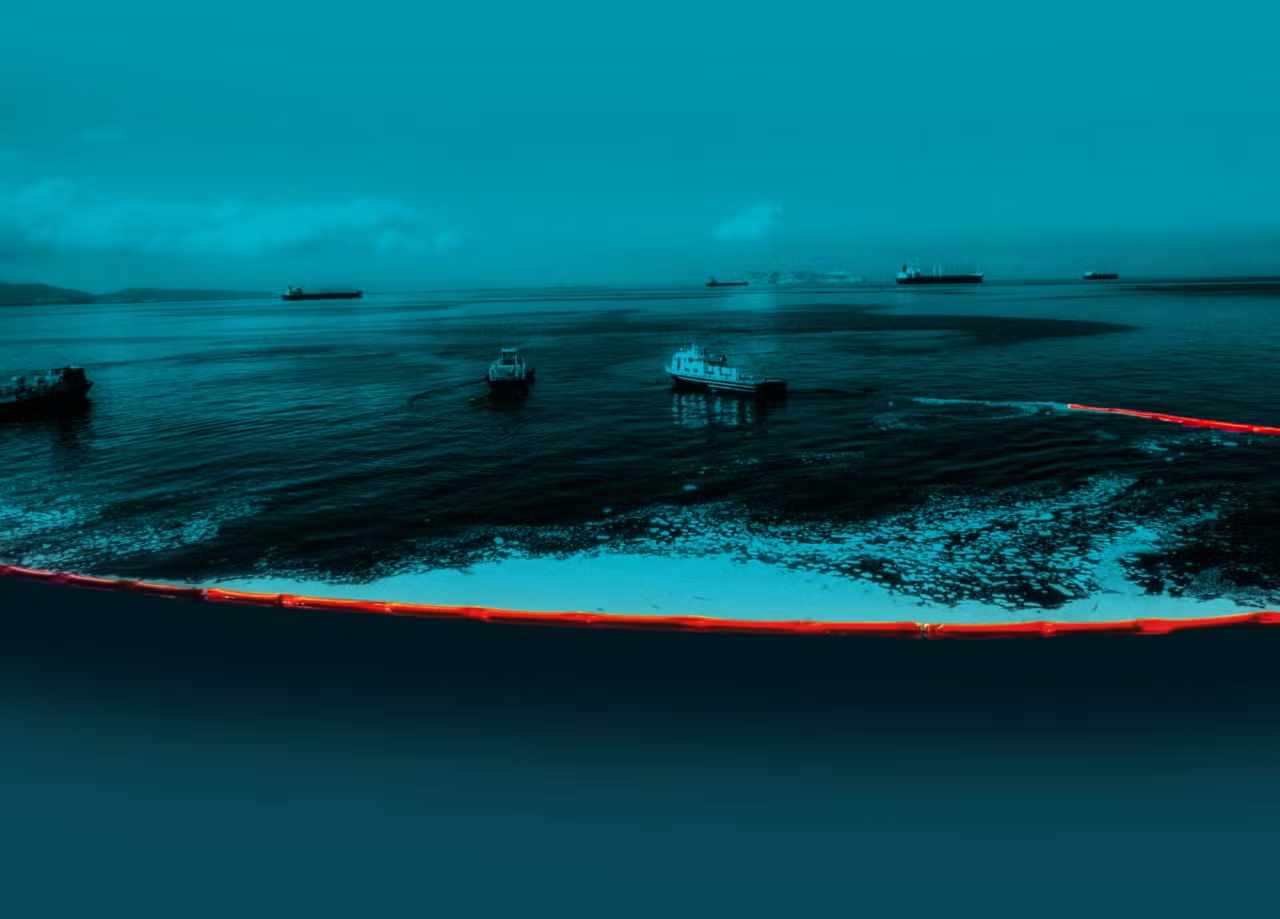
The number of marine oil spills and amount of oil spilled worldwide has decreased due to improved safety measures, even though the volume of oil carried by ships – whether as cargo or fuel – has increased significantly.[1] [2] The risk of a spill in Canadian waters is low,[3] but should it happen spill response plans are in place.
If a spill occurs, who cleans it up and how? What are the resources available to minimize the environmental damage? How is the recovered oil safely disposed? Who pays for the cost of clean-up and damages as a result of an oil spill?
The purpose of this site is to answer these questions, provide the facts about response to oil spills from commercial ships – whether the oil is cargo or fuel – in Canadian waters and encourage informed conversations on the topic.
This site was created by Clear Seas, an independent not-for-profit research centre that supports safe and sustainable marine shipping in Canada.

Oil Spills in Canada
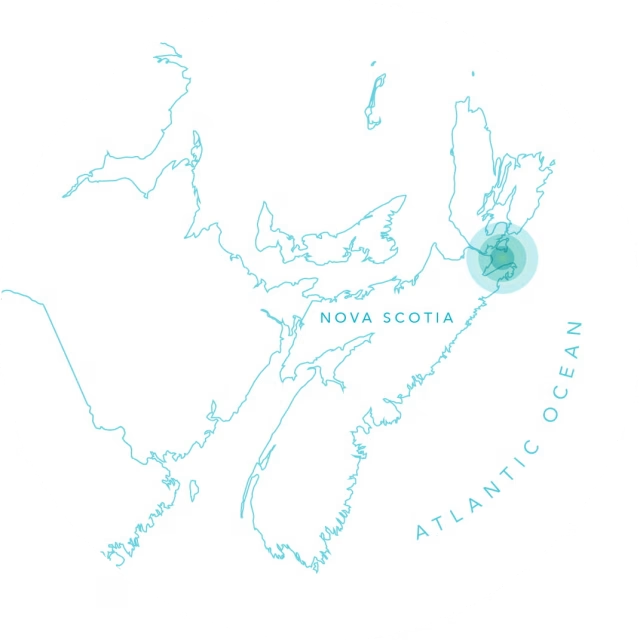
1970: SS Arrow
Canada’s Largest Oil Spill
In 1970, the tanker SS Arrow ran aground in the Atlantic Ocean near Nova Scotia and spilled approximately 10 million litres of fuel oil – enough to fill four and a half Olympic-sized swimming pools.
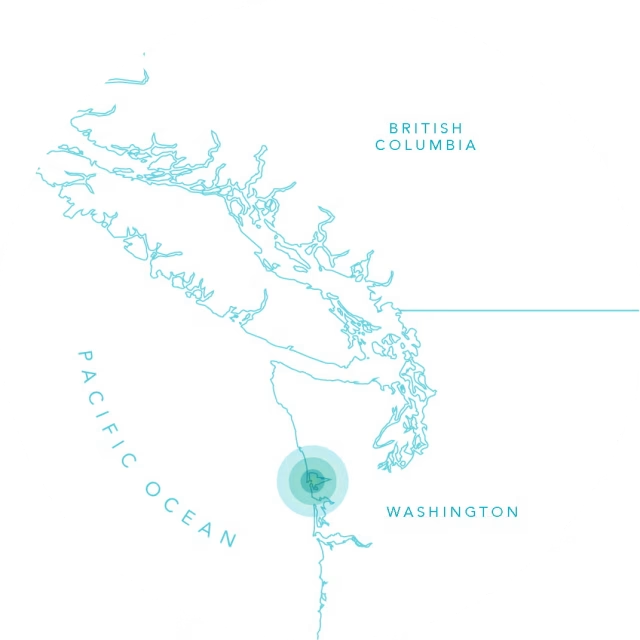
1988: Nestucca
Largest Oil Spill on Canada’s Pacific Coast
In 1988, 874,430 litres of fuel oil – about one third the volume of an Olympic swimming pool – was released when a tug collided with the fuel barge Nestucca off the coast of Washington state. Oil from the Nestucca washed ashore, reaching parts of British Columbia’s coast.
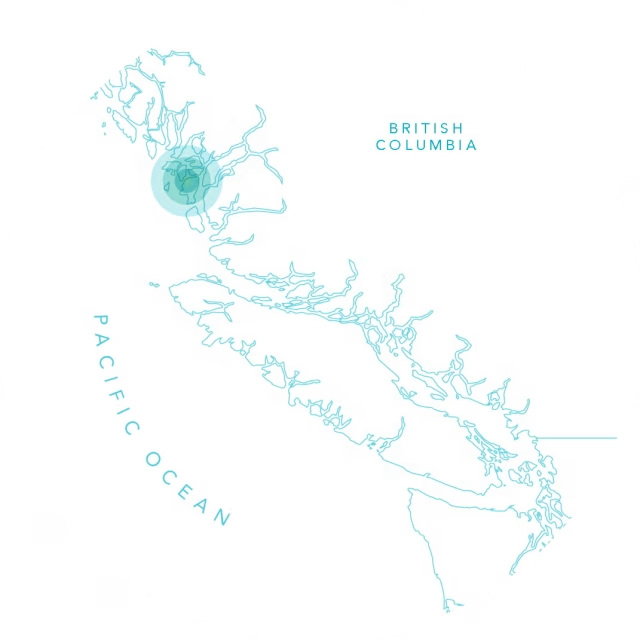
2016: Nathan E. Stewart
Most Recent Spill of Note
In 2016, the Nathan E. Stewart tugboat ran aground near Bella Bella, BC, spilling 110,000 litres or approximately one railcar’s worth of diesel fuel.
THREE PILLARS OF OIL SPILL RESPONSE
The National Oil Spill Preparedness and Response Regime, a public-private partnership, provides a framework to address ship-source oil spills in Canadian waters south of 60° North. To protect our environment from the risk of spills, Canada has established three pillars of defence:

1. Prevention
Continuously improving measures to prevent oil spills from ships include requirements for:
- Double hulls
- Escort tugs
- Inspections
- Highly trained local marine pilots to guide vessels in transit as well as traffic control systems and navigational aids
Aerial monitoring activities also contribute to preventing ship-source pollution – as ships in Canadian waters are under air surveillance.

2. Preparedness
Being prepared to respond to a spill enables responders to act quickly and limit environmental damage. From coastal risk assessments to local and regional response plans, contracts with response organizations, equipment caches, on-water exercises and personnel training, Canada is continually improving its spill response preparedness.

3. Response
Should prevention efforts fail and an oil spill happens, a safe and effective response must be launched quickly. The polluter – the ship owner or operator that caused the pollution – is responsible for taking the lead to clean up the spill. All commercial ships are required to have a contract with one of Canada’s four government-certified and industry-funded response organizations to conduct clean-up efforts on the polluter’s behalf.
Operations generally follow an Incident Command System[8] with involvement or oversight by the Canadian Coast Guard when the polluter is either unable or unwilling to respond.
Canada applies the internationally established “Polluter Pays Principle” for all costs and damages associated with response, remediation and recovery of the area affected by an oil spill. The polluter pays for damages by drawing from its mandatory insurance and from national and international funds paid by industry, if necessary.
WHO RESPONDS TO AN OIL SPILL?
Canada’s response system is a partnership between government and industry. It relies on relationships among key partners, First Nations and other stakeholders.
The Polluter
Canada puts the onus for cleaning up a ship-source spill on the polluter. Ships entering or transiting Canadian waters are required to have a Shipboard Oil Pollution Emergency Plan, which tells the ship’s crew what actions to take and who to contact when the risk of an oil spill is imminent or when an incident has occurred.
All tankers of 150 gross tonnes (approximately 20-30 metres in length) and all vessels of 400 gross tonnes (approximately 30-40 metres in length)[9] or greater, as well as all oil handling facilities, must have an arrangement with a certified response organization to operate in Canadian waters. If a spill occurs, the polluter must report the spill and take action to respond. If the spill exceeds the ship’s clean-up capacity, the ship can contract its response organization to assist with the clean-up efforts.
Canadian Coast Guard
The Canadian Coast Guard is a special operating agency within the Department of National Defence.
During clean-up operations, the Canadian Coast Guard takes the lead in the response effort and works with the polluter and other stakeholders to ensure an appropriate response.
The Canadian Coast Guard does not take the lead in responding to marine pollution incidents outside its mandate, such as pipeline spills and land-based spills.[10] However, the Coast Guard can provide assistance to those responsible for responding to such incidents.
Response Organizations
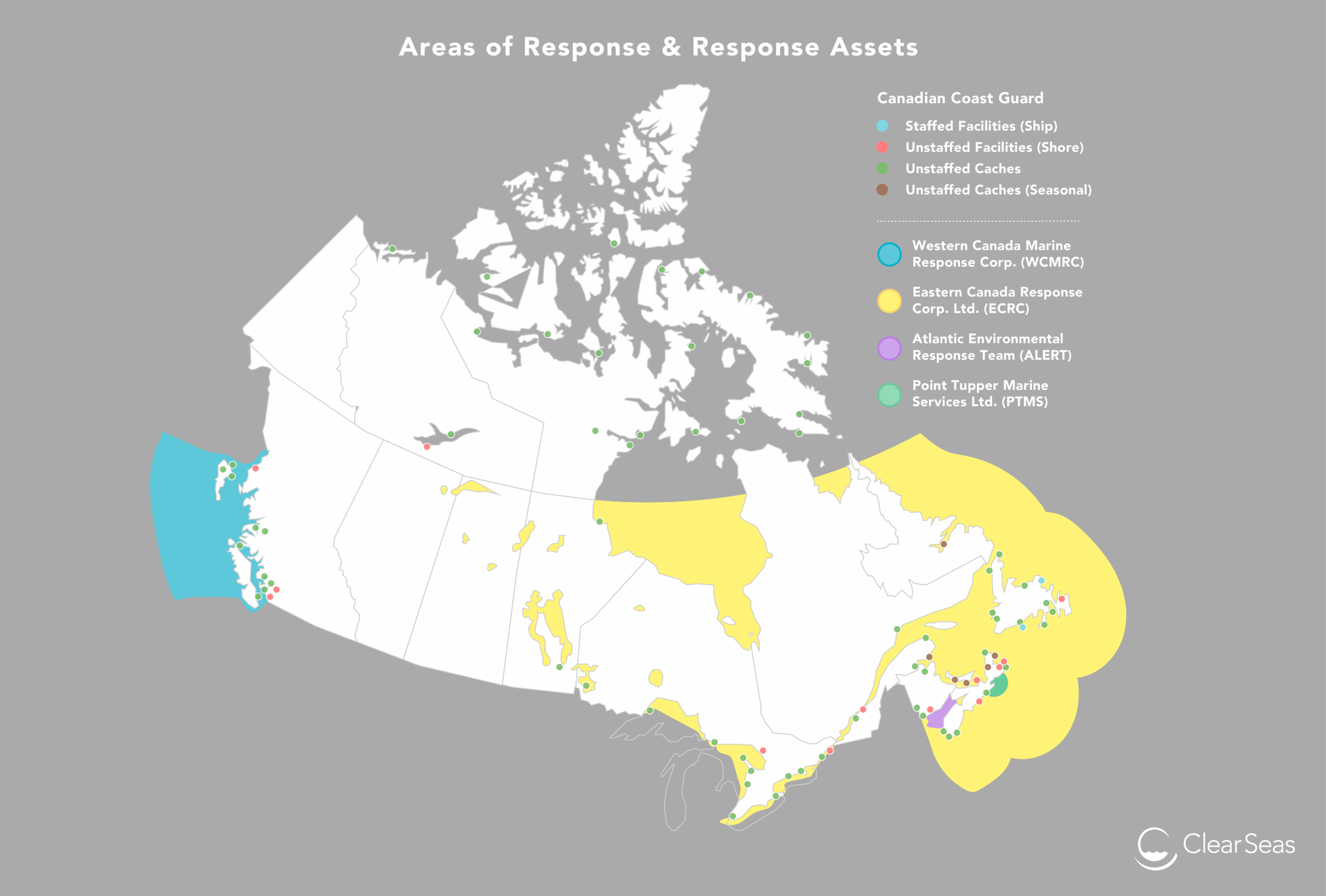
Canada’s four response organizations have area-specific response plans ready to deploy at short notice for all of Canada’s waterways south of 60° North and extending up to 200 nautical miles offshore. Transport Canada conducts ongoing capacity and procedure audits[11] and re-certifies each response organization every three years, according to specific technical and operational requirements.
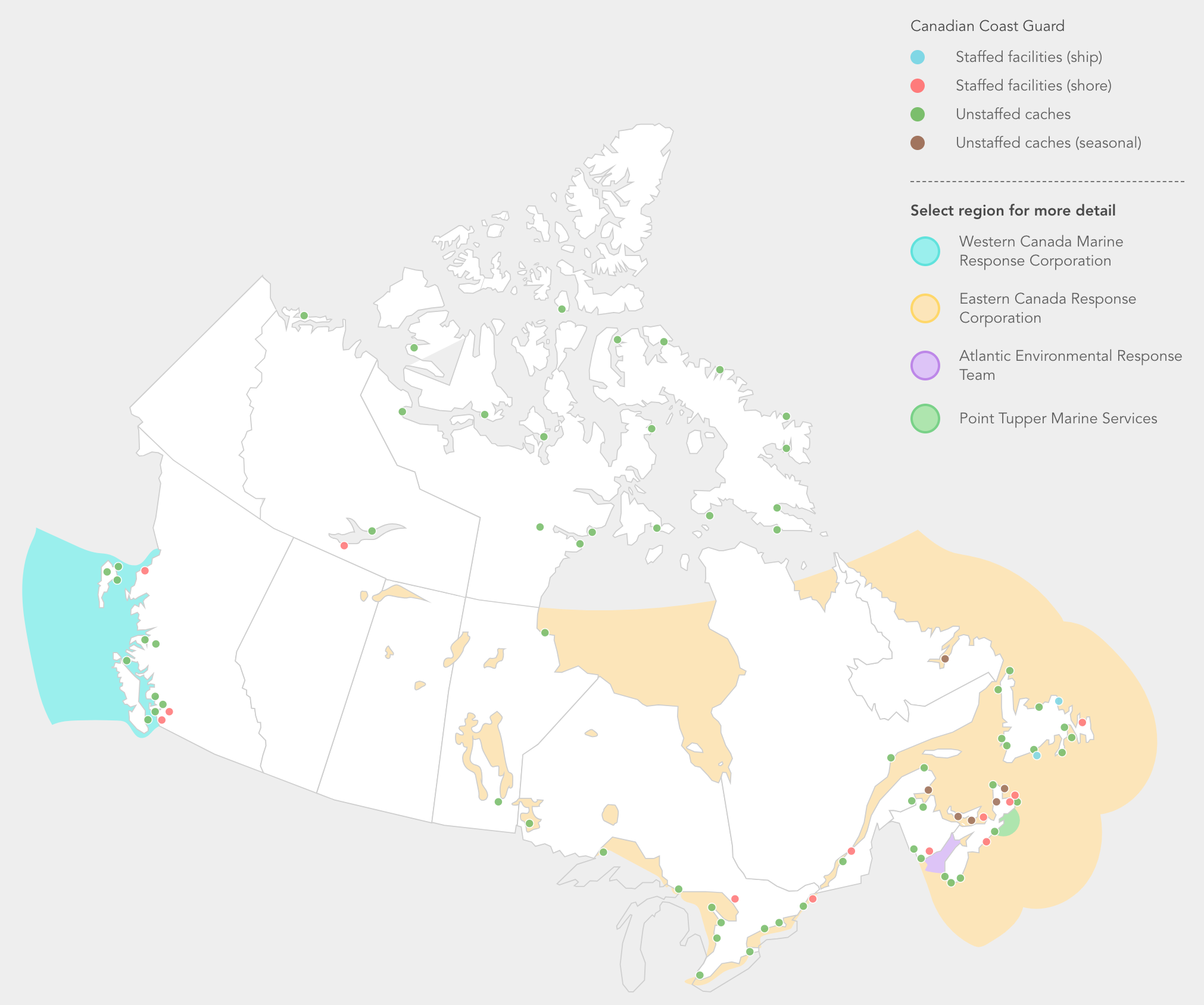
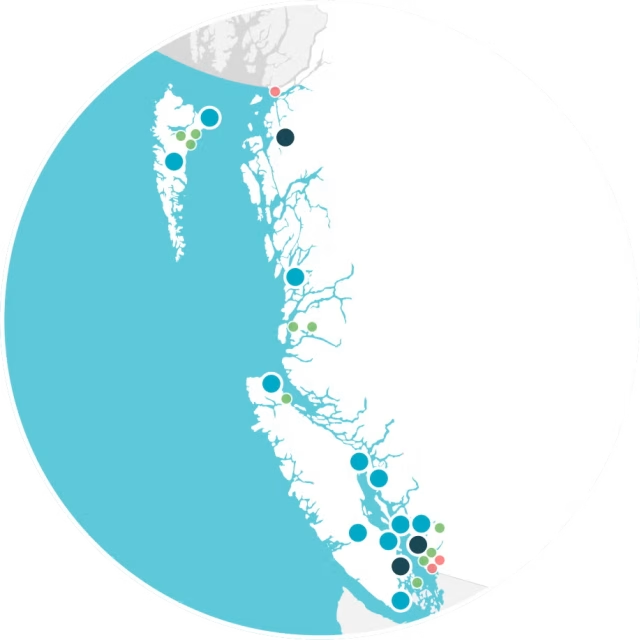
Western Canada Marine Response Corporation
Western Canada Marine Response Corporation
Area of response: 27,000 km of Western Canada’s coastline from Alaska to Washington State up to 200 nautical miles off the coast, including inland navigable waters that can accommodate vessels of 150 to 400 gross tonnes (including the Fraser River up to New Westminster, BC)
 Fleet size: 55 response vessels
 Response bases: 7
 Equipment caches: 11
 CCG staffed facilities (shore)
 CCG unstaffed caches
Eastern Canada Response Corporation
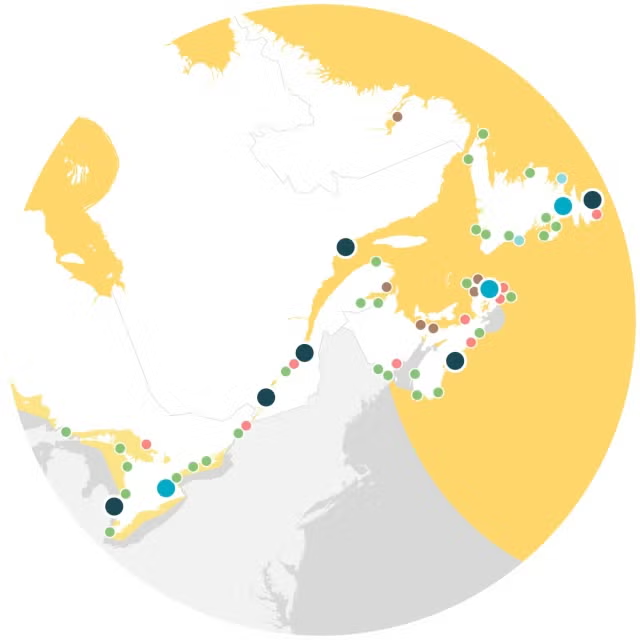
Eastern Canada Response Corporation
Area of response: All navigable waters east of the Rocky Mountains, including the Great Lakes, St. Lawrence, Atlantic, and Hudson Bay regions south of 60° North, except the areas serviced by Atlantic Environmental Response Team and Point Tupper Marine Services
Fleet size: 88 response vessels Response bases: 6 Equipment caches: 3 CCG staffed facilities (ship) CCG staffed facilities (shore) CCG unstaffed caches
 CCG unstaffed caches (seasonal)
Atlantic Environmental Response Team
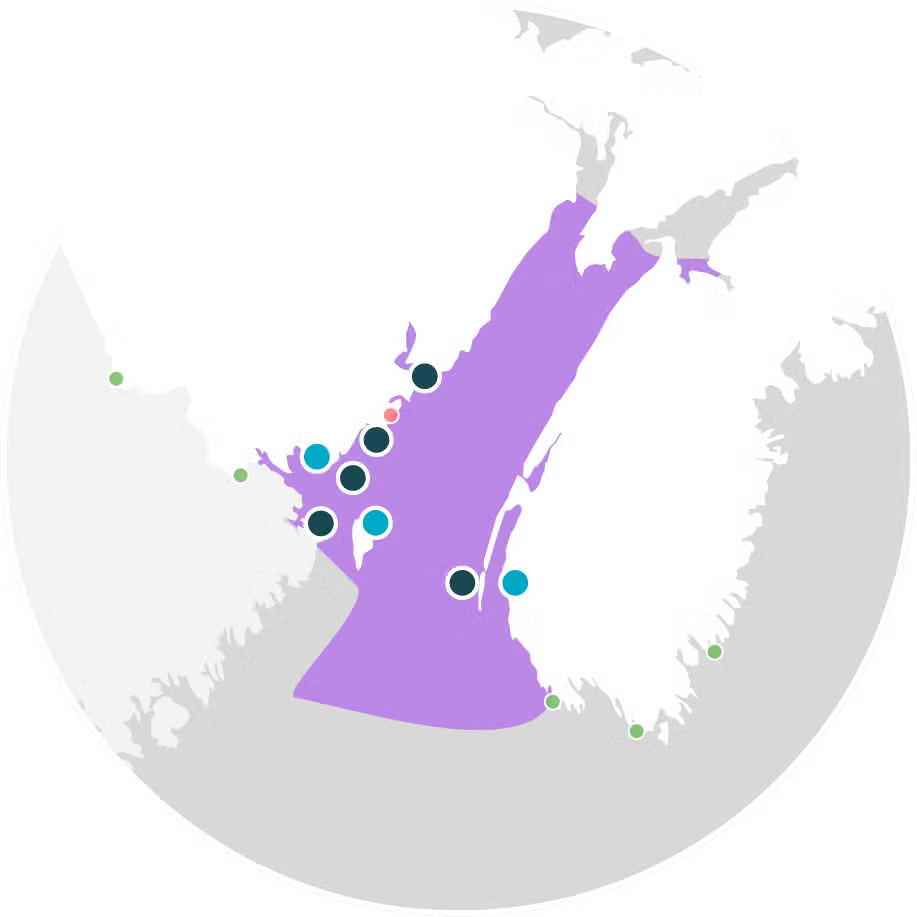
Atlantic Environmental Response Team
Area of response: Bay of Fundy region, including the southeastern coast of New Brunswick and the northwestern coast of Nova Scotia
Fleet size: 30 response vessels Response Bases: 5 Equipment caches: 3 CCG staffed facilities (shore) CCG unstaffed caches
Point Tupper Marine Services
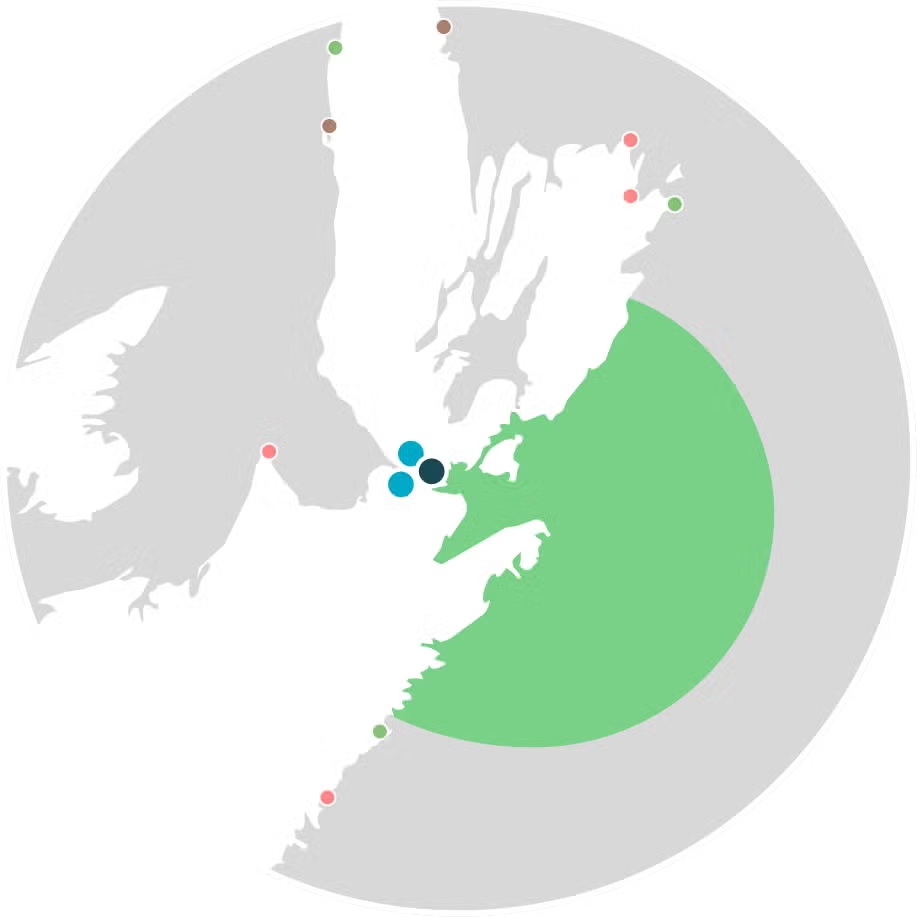
Point Tupper Marine Services
Area of response: Waters around Point Tupper, Nova Scotia (a 50 nautical mile radius around Bear Head Light) not extending north of the Canso Causeway into Saint George Bay and the contiguous land mass
 Fleet size: 12 response vessels Response bases: 1 Equipment caches: 2 CCG staffed facilities (shore) CCG unstaffed caches CCG unstaffed caches (seasonal)

Governments’ Response to Oil Spills
Other federal government agencies also have a role in spill response in Canada.
Fisheries and Oceans Canada defines the scope and framework within which the Canadian Coast Guard will operate, through the national Marine Spills Contingency Plan.
Environment and Climate Change Canada is responsible for providing environmental and scientific advice during an oil spill response, such as weather conditions, spill movement, sensitive habitats and species at risk.
Transport Canada manages and oversees the National Oil Spill Preparedness and Response Regime. It assesses marine incidents risks, monitors the waterways, ensures Canada has the appropriate capacity to respond to oil spills, and that response organizations operate according to regulations in place.
Indigenous peoples have been governing marine territories using their own legal traditions since time immemorial and continue to fulfil their responsibility to steward and protect their ecosystems.
Coastal First Nations, Inuit and Métis have an inherent right to govern their territories, recognized under s. 35 of the Constitution Act, 1982. This right includes the jurisdiction to regulate the use of its lands and waters. Reconciliation of Canadian and Indigenous sovereignties call for Canada’s respectful attention to First Nations, Inuit and Métis’ need to safeguard their waters.
Provincial and territorial governments, through their respective Ministries of Environment and Emergency Management agencies, liaise with all oil spill response partners during clean-up and recovery operations to oversee the land between high- and low-tide marks.
Local government resources may be able to support response operations by providing local knowledge, personnel or equipment.

Canada-United States Collaboration
A formal Canada-US Joint Marine Pollution Contingency Plan is in place to respond to cross-border spills, indicating how the Canadian and US Coast Guards will collaborate to coordinate the response.
Canada works with the seven other Arctic nations to coordinate response to any oil spill occurring north of 60° North in accordance with the Arctic Council Agreement on Cooperation on Marine Oil Pollution Preparedness and Response in the Arctic.

Indigenous, Coastal Communities and the Public
Indigenous and coastal communities may be the first to identify an oil spill on the coast, particularly in remote areas. Indigenous communities also possess Traditional Knowledge of the marine and land resources including sensitive coastal areas and species at risk. As knowledge holders, Indigenous communities may be able to contribute valuable insights to the response effort.[12]
The public can also provide key local knowledge to the response effort, such as reporting affected wildlife to the authorities. Although members of the public are not involved in the response, they may volunteer through official channels.

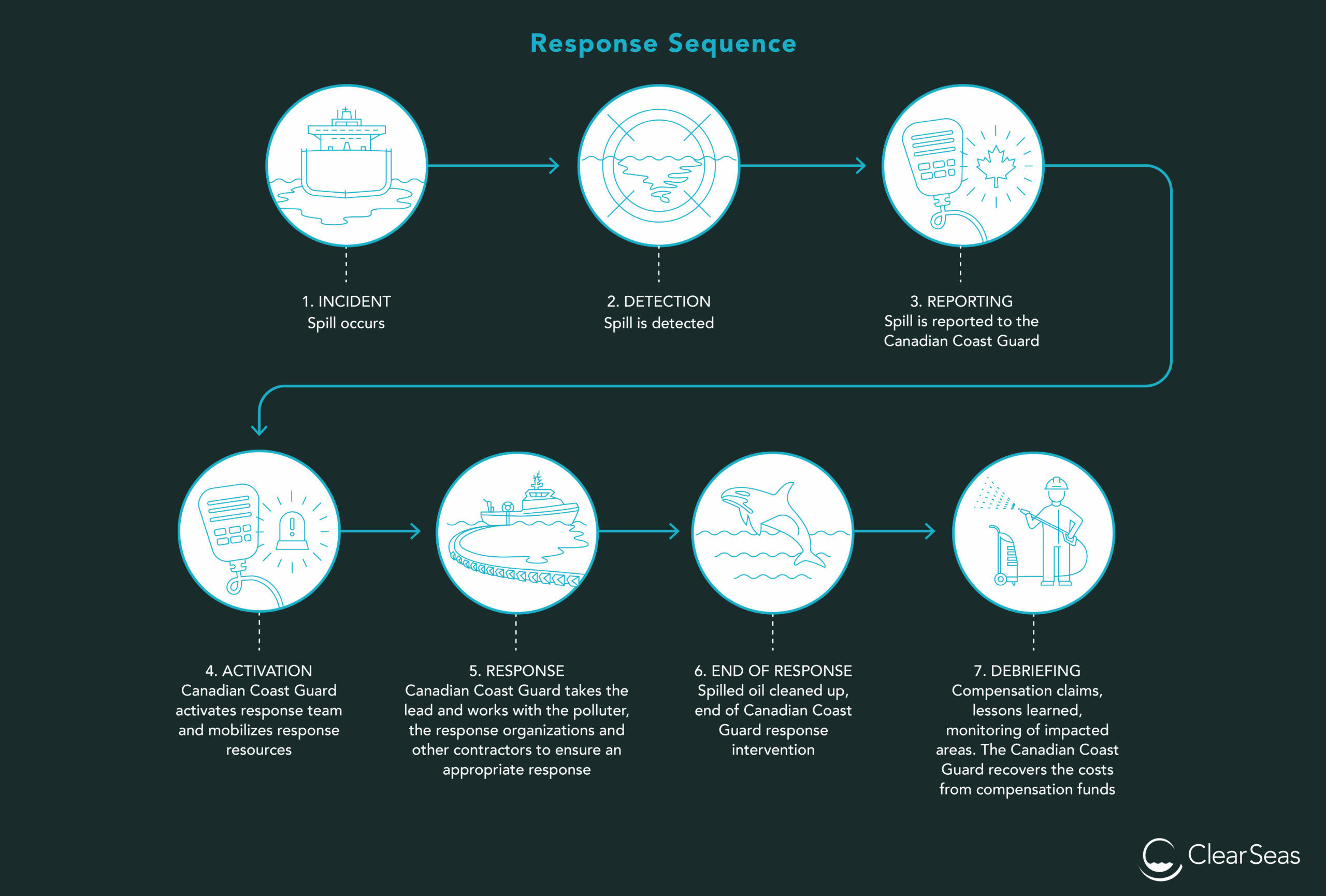
WHAT HAPPENS WHEN A SPILL OCCURS?[13] [14]
1. INCIDENT
Spill occurs
2. DETECTION
Spill is detected
3. REPORTING
Spill is reported to the Canadian Coast Guard

4. ACTIVATION
Canadian Coast Guard activates response team and mobilizes response resources
5. RESPONSE
Canadian Coast Guard takes the lead and works with the polluter, the response organizations and other contractors to ensure an appropriate response
6. END OF RESPONSE
Spilled oil cleaned up, end of Canadian Coast Guard response intervention

7. DEBRIEFING
Compensation claims, lessons learned, monitoring of impacted areas. The Canadian Coast Guard recovers the costs from compensation funds
HOW IS AN OIL SPILL CLEANED UP?
An oil spill response progresses through three stages:
- Evaluate the spill
- Clean up the spill (on water and on shore)
- Dispose of the oily waste
Within each stage, responders evaluate many factors to decide how best to contain and clean up the spill. The safety of responders and the public is always the priority in all phases of the operation.
1. Evaluation
Evaluating an oil spill needs information gathered about the area before the spill occurs as well as information about the spill itself. Access to accurate information helps responders make better decisions and act faster when a spill occurs.
Advance Information for Spill Response
The on-water and shoreline oil spill clean-up methods in Canada are based on data collected by Environment and Climate Change Canada’s National Environmental Emergencies Centre and Regional Environmental Emergency Teams. Data gathering includes identifying and mapping sensitive areas, habitats and wildlife populations to be able to provide response teams with expert scientific advice during a spill response.[15]
Response organizations also collect coastal sensitivity data working with local communities including First Nations to develop area-specific response strategies.
Shoreline Mapping
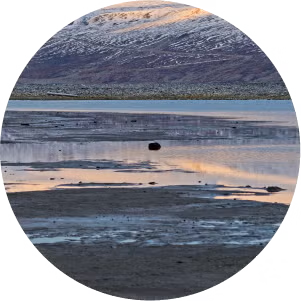
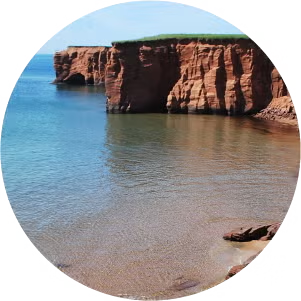
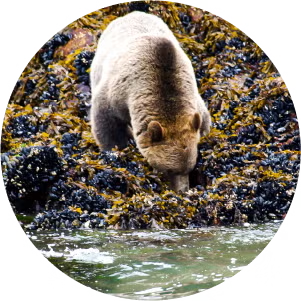
To identify environmentally sensitive and culturally significant areas along Canada’s coasts, Environment and Climate Change Canada gathers detailed coastal information through shoreline mapping. Helicopters flying at 300 metres collect photos and videos of the shore, especially areas between the high- and low-tide marks.
Shoreline mapping provides key information about the type of shorelines – such as sand, mud, rocks, cliffs, and tidal flats – and wildlife in the area. The location-specific imagery is made available to response teams for effective decision-making and rapid deployment when an oil spill occurs.
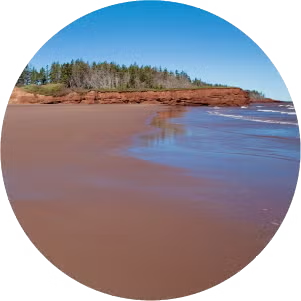
Sand
Mud

Rocks
Cliffs

Tidal Flats
Wildlife
Situational Information for Spill Response
When deciding how to respond, responders must consider variables such as:
- Type of oil
- Amount of oil
- Location of the spill
- Distance from response resources and time to reach the spill
- Distance from the shoreline
- Type of water (fresh, salt, or mixed)
- Type of shoreline (rocky, sandy, marshy)
- Proximity to sensitive marine habitats or other important areas
- Wind and wave action
- Currents and tides
- Temperature of the air and water
- Presence of ice, rain or snow
2. Clean Up
A spill clean-up effort typically consists of containing the spill, cleaning up the oil from the water, and cleaning up the shores, if affected by the spill.
First Stage: Contain the Spill
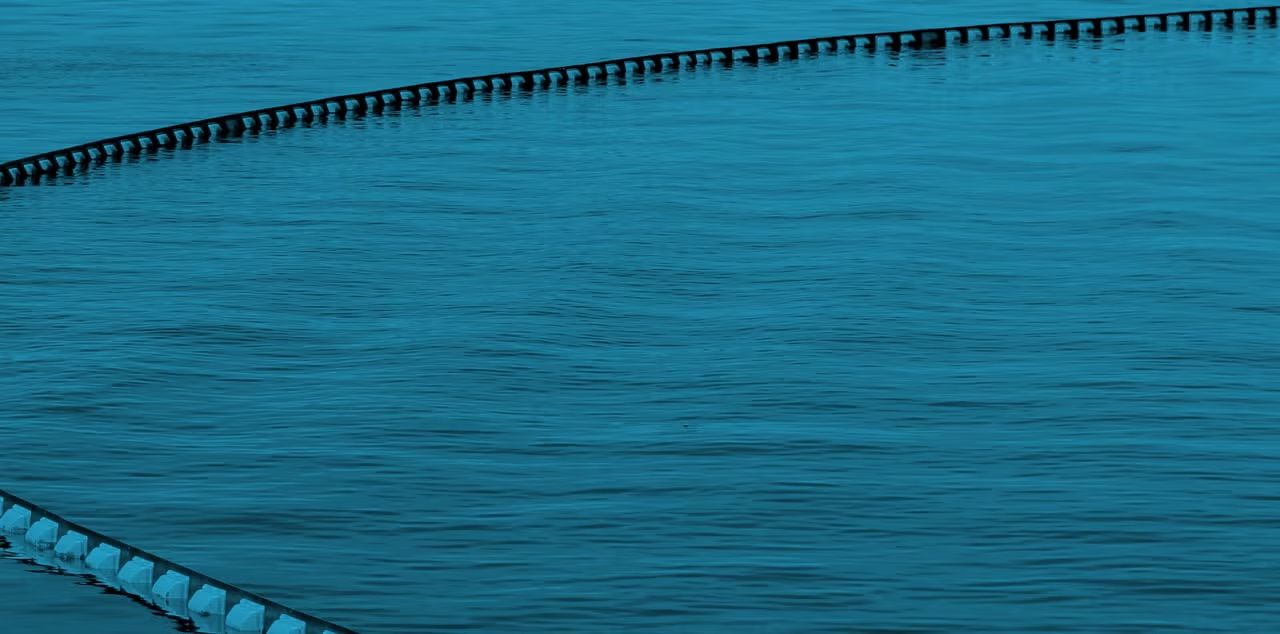
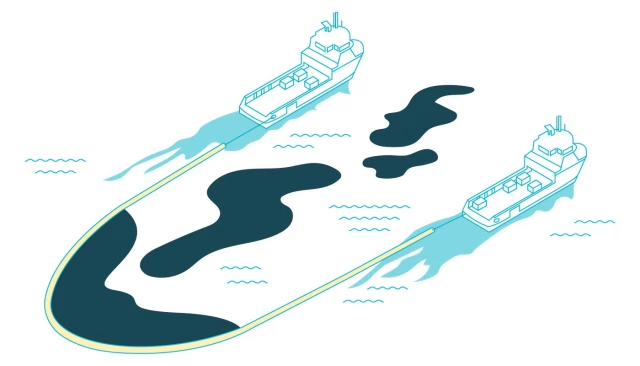
Containing the oil is critical to limit damage and to clean up as much oil as possible. Containment booms (floating barricades) are the first line of defence to prevent the slick from spreading and reaching sensitive habitats and shorelines.
Second Stage: Clean oil from the water
Once the oil is contained, responders assess different response measures to mitigate damage. When considering any clean-up method, responders use a Net Environmental Benefit Analysis approach to identify the approach that will minimize harm to people and the environment.
CLEAN-UP METHODS USED IN CANADIAN WATERS
-
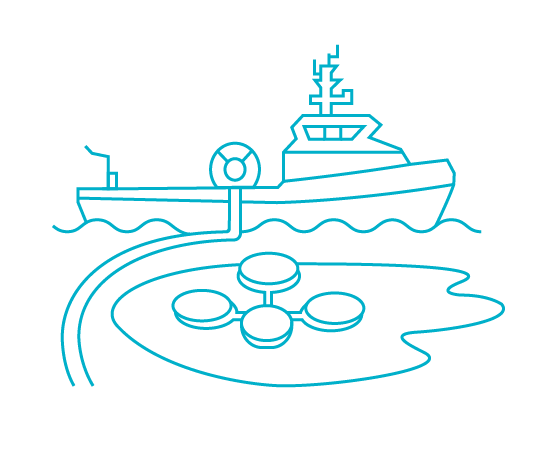
Mechanical
recovery -
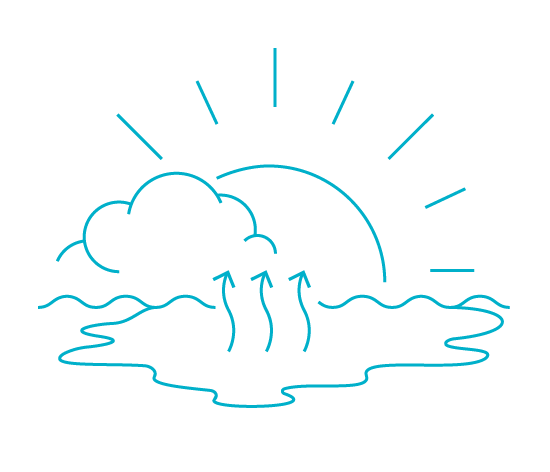
Natural
recovery
ALTERNATIVE CLEAN-UP METHODS CURRENTLY UNDER STUDY
-
Chemical oil
dispersants -
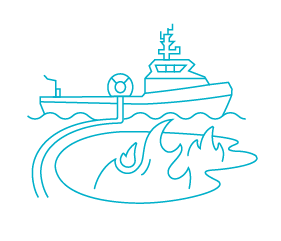
In-situ
burning
Mechanical recovery
Mechanical recovery is the most often used response method in Canada. During mechanical recovery, containment booms are deployed around the spilled oil. Response vessels then use sorbent pads, skimmers and vacuum systems to sop, scoop or pump the oil out of the water. The retrieved oil is collected in the response vessel then transferred to storage barges and taken to a disposal centre. Mechanical recovery can be limited by:
-
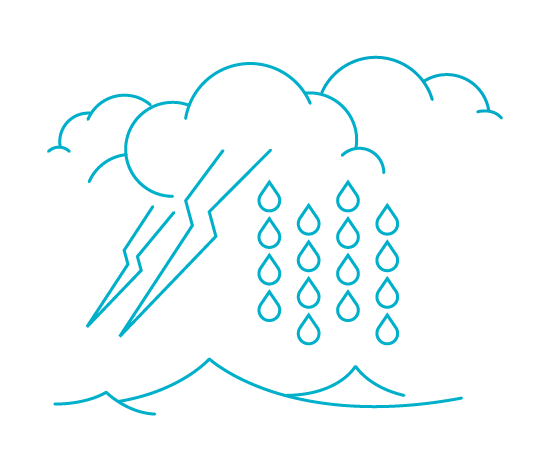
Rough weather conditions with strong currents and waves
-
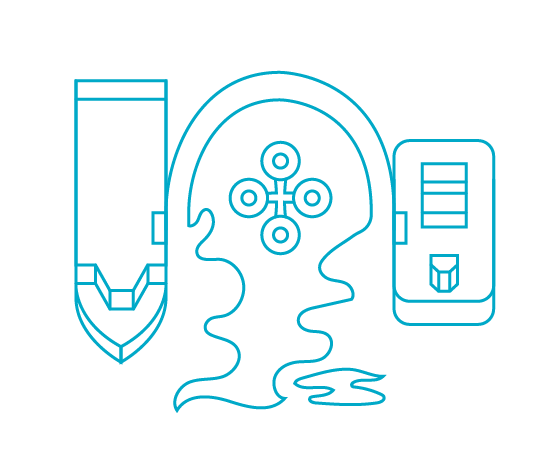
Capacity of skimming vessels and storage barges
-
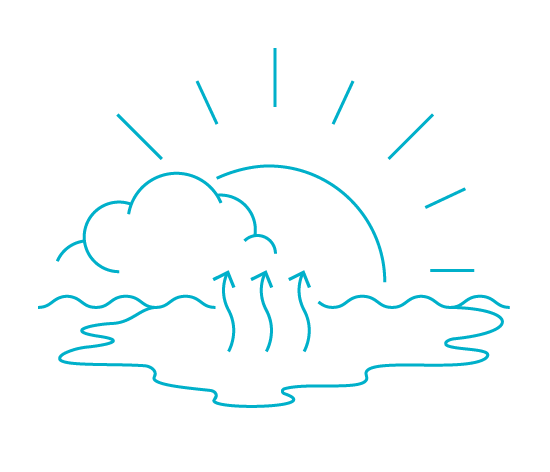
Thickness of the oil on the water and how quickly it spreads, evaporates, or
dissolves
Natural recovery
Letting the oil disperse naturally is an approach most often used in harsh weather or when spills occur far from shore. Where natural recovery is the best strategy, response teams still monitor the spill closely in case additional response measures need be deployed later. Strong winds and high waves can create unsafe conditions for responders and make mechanical recovery difficult or impossible. In severe conditions, oil weathers and breaks down more quickly, encouraging dispersion. The dispersed oil particles are eventually broken down by ocean bacteria that have evolved to eat hydrocarbons.[16]
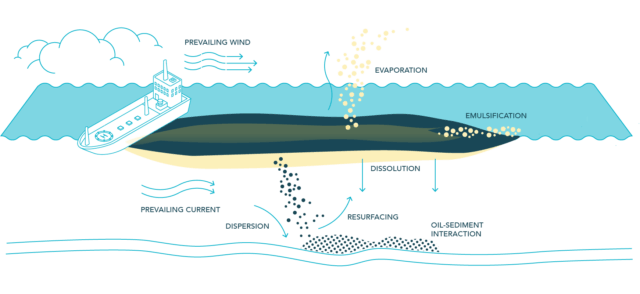
Chemical oil dispersants
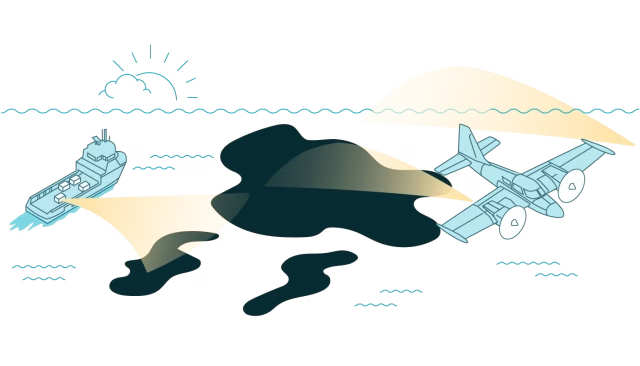
Used internationally and currently under study in Canada[17], chemical oil dispersants can be applied to a spill to quickly break down the oil into smaller droplets – like dish soap on grease. The small particles are then degraded through natural processes such as oil-eating bacteria[18][16]. Dispersants can be effective to treat large oil slicks, to limit the impact of oil on sensitive habitats, wildlife or shorelines, and to respond to a spill under rough wind an sea conditions. They are usually sprayed using aircraft or vessels equipped with spraying arms. Learn more about oil dispersants here.
In-situ burning
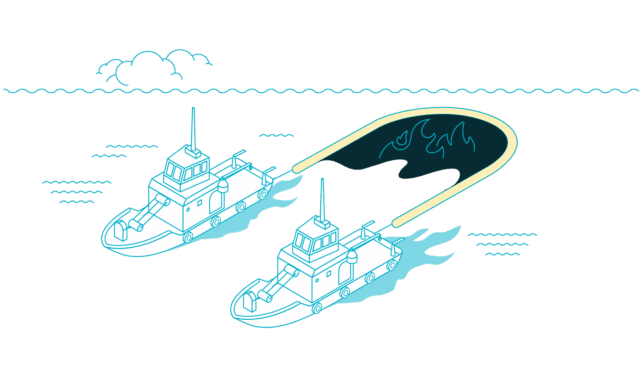
In-situ burning is a response measure where the oil slick is ignited to burn the oil off the water’s surface. Prior to ignition, the slick is contained using fire-resistant booms.[19] In calm conditions and if located far away from shorelines and populated areas, in-situ burning can rapidly reduce a thick slick of oil. As this method can create toxic fumes and residues that can harm the marine environment and people,[19]in-situ burning is assessed on a case-by-case basis in Canada.
Third Stage: Clean Oil from the Shore
If oil reaches the shore, response teams are mobilized for shoreline clean-up. Oil can be manually recovered from the shore or washed off the beaches into the water to be collected off the water’s surface. The most appropriate methods to use depend on the type of shoreline as well as proximity to people, sensitive ecological areas, wildlife and key natural resources. Shoreline clean-up methods[20]include:
-
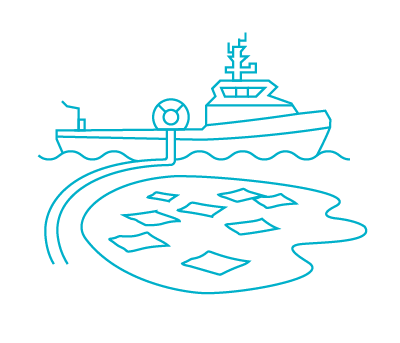
Sorbents
Natural or synthetic materials used to absorb oil -
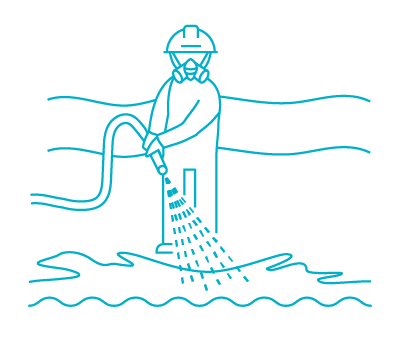
Shoreline flushing
Using water to refloat oil for easier recovery -
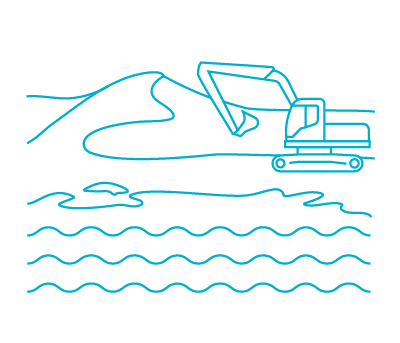
Berms
Ledge made of soil, sand or other materials, built to contain oil and
stop it from spreading further -
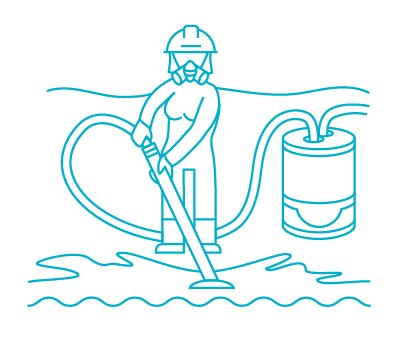
Vacuums
Devices that remove the oil from the ground by suction
3. Disposal of Oily Waste
Oily waste can be highly toxic and must be handled, treated and disposed of safely. In Canada, the disposal of oily waste is the responsibility of the polluter.
Different types of oily waste are usually stored separately as the disposal method depends on the type and level of contamination of the recovered oil.
If oil is recovered quickly and is not contaminated by water and debris, it can be sent to recycling facilities to be reprocessed. Heavily contaminated oil is usually taken to a disposal site.
Disposal methods depend on the[21]:
Type of oily waste
Amount of oil recovered
Location of the spill
Capacity required to store and transport the recovered oil
Availability of storage, treatment and disposal facilities
Costs involved
Situational Information for Spill Response
When deciding how to respond, responders must consider variables such as:
- Type of oil
- Amount of oil
- Location of the spill
- Distance from response resources and time to reach the spill
- Distance from the shoreline
- Type of water (fresh, salt, or mixed)
- Type of shoreline (rocky, sandy, marshy)
- Proximity to sensitive marine habitats or other important areas
- Wind and wave action
- Currents and tides
- Temperature of the air and water
- Presence of ice, rain or snow
How do different types of oils behave in water?
Not all types of oil behave the same way in water; the length of time oil will remain on the surface of the water before spreading, evaporating, dissipating or sinking can vary.[22] [23]
Overall, oils can be categorized into two groups:
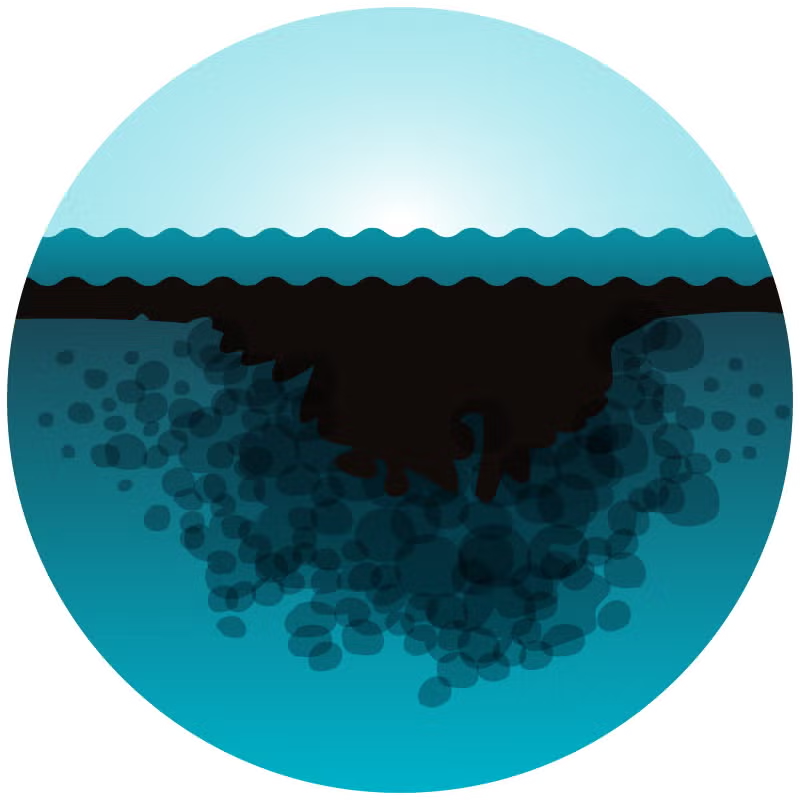
Persistent Oils
Types
- Heavy fuel oil
- Marine diesel oil
- Low sulphur marine diesel oil
- Crude oils (medium, light)
- Heavy oils (conventional, diluted bitumen, bitumen mixed with non-persistent oil)
- Bitumen (extra heavy oil)
Characteristics (compared to non-persistent oils)
- Thicker consistency (higher viscosity)
- Slower to dissipate with more residue left behind[24]
- Density of residue can be high enough that portions submerge or sink
- Interaction with sediment can make portion submerge or sink
- Residue can have prolonged impact on marine wildlife and environment[23]
- Requires active response operations[23]
Common behaviour in water [25]
- Spreads
- Emulsifies
- Interacts with sediment on shoreline and seafloor
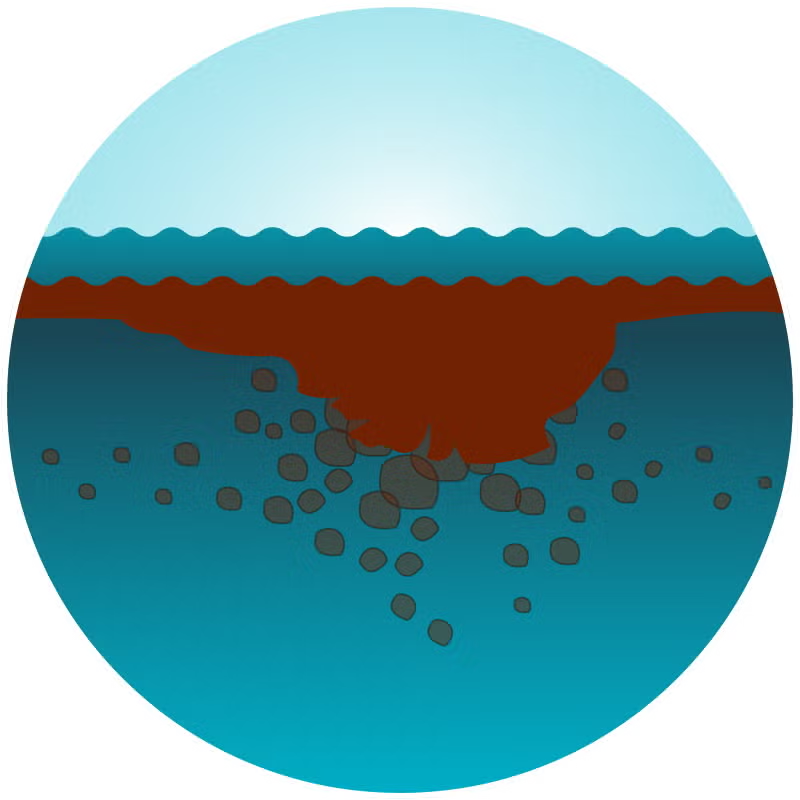
Non-Persistent Oils
Types
- Gasoline
- Kerosene
- Diesel
- Liquefied natural gas
- Jet fuels
Characteristics (compared to non-persistent oils)
- Thinner consistency (low viscosity)
- Quicker to dissipate with less residue left behind[24]
- Higher toxicity for water and air hazard (more volatile)
- Environmental impacts tends to be localized but acute[23]
- Interactions with sediment can make portion submerge or sink
- Rarely requires active response operations[23]
Common behaviour in water [25]
- Spreads
- Evaporates
- Disperses
- Dissolves
CAN DILUTED BITUMEn Be RECOVERED FROM WATER?
To assist heavier crude oil or bitumen from Alberta to flow through pipelines it is mixed or diluted with lighter petroleum products. The resulting diluted bitumen is an oil blend that is lighter than water and, like most crude oils, floats if spilled in the ocean.[26]
Diluted bitumen reacts similarly to conventional crude oils when spilled in water.[27] [28] [29] [23] Despite concerns that it sinks faster than other types of oil making it difficult to recover in the event of a spill, research, including lab, pilot tests and field trials, as well as spill response experience, has shown that diluted bitumen will float for at least two to three weeks depending on water conditions such as temperature, wave action and currents.
Experiments[30] and real-life spill experience by the Western Canada Marine Response Corporation[27] also show that diluted bitumen can be recovered from the water surface using conventional skimmers, booms and pads.
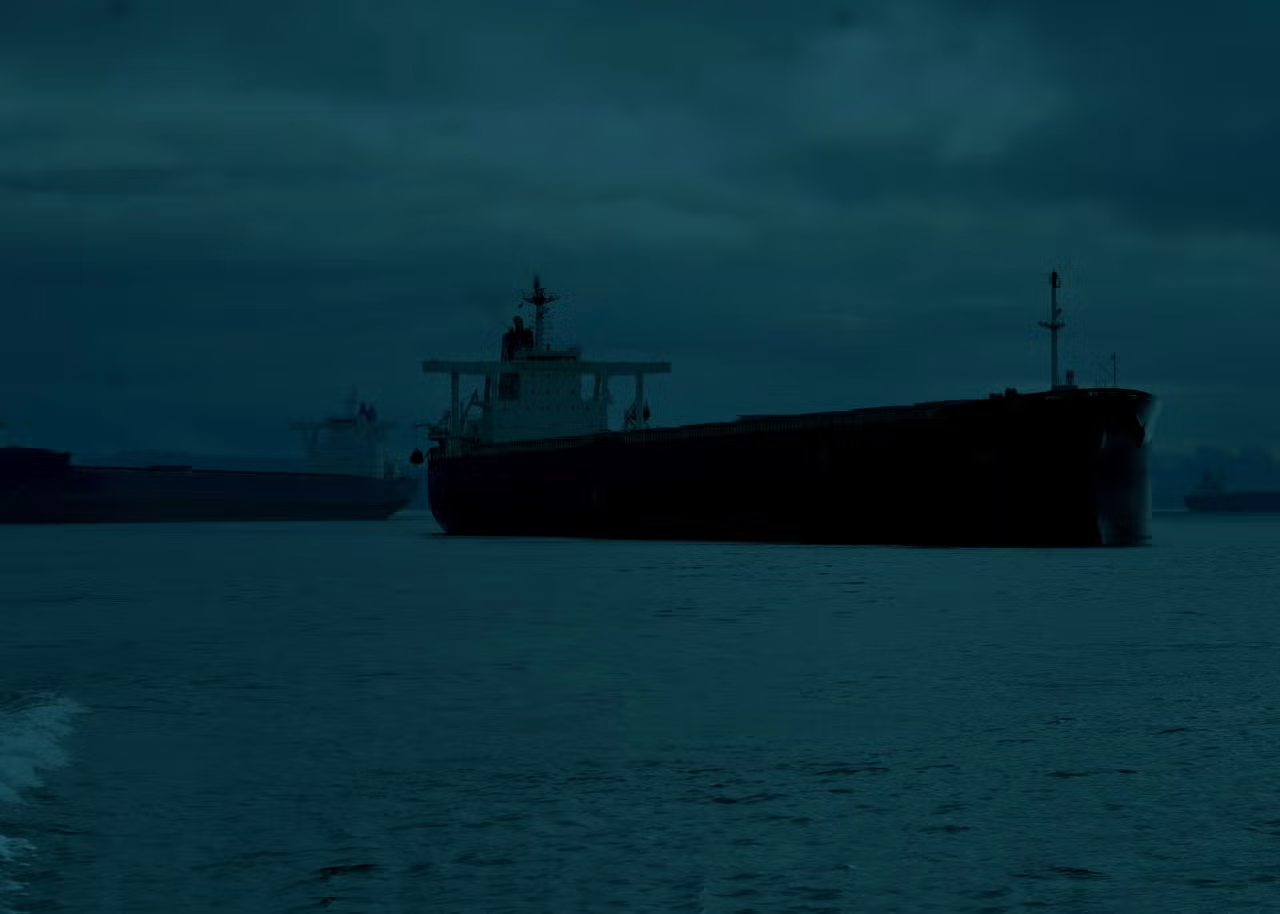
WHO PAYS FOR CLEAN UP?
Funding Oil Spill Response
In Canada, oil spill response organizations are funded by industry. For preparedness, oil handling facilities and commercial ships operating in Canadian waters pay annual fees to the relevant response organization to cover that response organization’s operating costs.
The Polluter Pays Principle
Under the Marine Liability Act , if a ship spills oil of any kind in Canada’s waterways, the polluter is liable to pay for clean-up costs. The shipowner is the primary source of compensation, covering eligible costs up to a limit. If claims submitted to the shipowner exceeds their limit of liability, additional compensation may be sought from other sources funded by industry.
One of those sources is Ship and Rail Compensation Canada. Created from industry levies, the Ship Fund has unlimited capacity to reimburse all eligible claims for loss or damage caused by ship-source oil spills in Canadian waters.
INITIATIVES UNDERWAY
Investments are being made by the federal and provincial governments and industry to better protect Canada’s coasts and waterways with initiatives to support and improve maritime safety, preparedness, and response to marine pollution incidents. A number of these initiatives are described here.
Oil Spill Preparedness and Response
Transport Canada is establishing an Office of Incident Management that will oversee the implementation of the Incident Command System to improve environmental emergency response capability and coordination. An Office of Incident Management has already been implemented by the Canadian Coast Guard.
Working with various partners, Fisheries and Oceans Canada is collecting key shoreline information in six regions across Canada to support evidence-based decisions during response to marine pollution incidents.
In partnership with the coastal First Nations in British Columbia, Environment and Climate Change Canada is developing a shoreline database including sensitive and culturally significant areas to help emergency teams better prepare for and respond to marine pollution incidents.
In its effort to map out the coast and develop Geographic Response Strategies, the Western Canada Marine Response Corporation is collaborating with coastal communities and First Nations to collect input about sensitive areas and establish the best response strategies to protect them in the event of a marine spill.
Through the Regional Response Planning pilot project, Central and North Coast First Nations are collaborating with the Government of Canada to increase and enhance emergency preparedness and response capacity for local First Nations. The project aims to determine how First Nations and governments can work together to respond quickly and effectively to marine spills.
The Canadian Coast Guard is providing environmental emergency training to enhance response capacity within Indigenous communities on Canada’s West Coast.
The Centre d’expertise en gestion des risques d’incidents maritimes (CEGRIM) – Government of Quebec’s centre of expertise in marine incident management – is providing maritime emergency response training to municipalities to ensure local communities are prepared to respond to oil spills.
Transport Canada is developing enhanced regulations and standards for oil spill response organizations
The Canadian Coast Guard is implementing 24/7 emergency management and response capacity within three existing Regional Operations Centres in Victoria, BC, Montreal, QC, and St. John’s, NL, and modernizing its response equipment including booms, skimmers, sweep systems, response vessels and emergency towing vessels.
The Western Canada Marine Response Corporation is currently enhancing its response resources in prevision of the Trans Mountain Pipeline Expansion Project scheduled to be operational at the end of 2022. Enhancements include additional response equipment and bases, reduced response time and double the clean-up capacities outlined in Transport Canada’s current standards.
The Canadian Coast Guard and the Pacheedaht First Nation have recently signed a Memorandum of Understanding for the construction of a multipurpose marine facility in Port Renfrew, BC, to provide environmental response services and enhance marine safety and response capacity in the Strait of Juan de Fuca.
Marine Safety and Surveillance
In January 2020, Canada acquired a new aircraft to increase the capacity of the National Aerial Surveillance Program designed to monitor Canada’s waterways and detect oil spills and marine pollution.
An Arctic National Aerial Surveillance Program Complex is being built in Nunavut to improve spill prevention in the Canadian Arctic.
The Multi Partner Research Initiative funds collaborative research at the national and international levels and aims to provide expert advice on best practices to respond to oil spills in Canadian waters. It focuses on identifying knowledge gaps, improving the understanding of the behaviours, fate and impacts of oil spills, developing new technologies and protocols for oil spill clean up including the use of alternative response measures such as dispersants, and support evidence-based decisions in oil spill response. In addition, federal oil spill science programs at facilities established by Environment and Climate Change Canada, Fisheries and Oceans Canada and Natural Resources Canada conduct research to improve understanding of oil spill fate and behaviour.
ABOUT CLEAR SEAS
Clear Seas is a Canadian not-for-profit organization that provides independent fact-based information to enable governments, industry, and the public to make informed decisions on marine shipping issues. We work to build awareness and trust so that all people can feel a part of the marine sector. Our vision is a sustainable marine shipping sector that is safe, vibrant, and inclusive, both now and for future generations.
As an independent research centre, Clear Seas operates at arm’s length from our funders. Our research agenda is defined internally in response to current issues, reviewed by our research advisory committee, and approved by our board of directors.
Our board of directors is composed of mariners, scientists, community leaders, engineers and industry executives with decades of experience investigating human, environmental and economic issues related to our oceans, coastlines and waterways.
All reports and findings are available to the public at clearseas.org
Traditional Knowledge and spill response
Traditional Knowledge is a body of knowledge specific to Indigenous people. It includes deep understanding and insights into traditional subsistence and resource harvesting practices as well as extensive knowledge of environmentally sensitive and culturally significant coastal areas. Traditional Knowledge, including ocean currents and weather conditions, comes from Indigenous peoples’ cultural heritage, traditional lifestyles and the strong relationship they cultivate with the natural environment.
Following a marine pollution incident, Indigenous communities can provide key insights to response teams regarding areas, resources, and wildlife at risk.
Indigenous community involvement was assessed in an investigation conducted by the Heiltsuk Nation following the grounding of the Nathan E. Stewart tugboat in British Columbia in 2016. Following that investigation, the Heiltsuk Nation submitted a proposal to the Government of Canada for an Indigenous-led Marine Response Centre to respond to marine incidents on their territory and beyond.
Sources & Citations
- International Tanker Owners Pollution Federation. (2019). Oil Tanker Spill Statistics.
- Transport Canada. (2020). Get the Facts on Oil Tanker Safety in Canada. Government of Canada.
- Transport Canada. (2019). Preparedness and Response for Ship-Source Oil Spills – Risk Assessment for Marine Spills in Canadian Waters. Government of Canada.
- An oil spill is the accidental discharge of any type of oil from a ship, either as cargo or fuel.
- Ship-Source Oil Pollution Fund. (2019). The Administrator’s 30th Annual Report 2018-2019. p. 4, 40-47.
- At the time of a spill, the ship’s crew acts on behalf of the ship owner or operator to take the lead and clean up the spill.
- Transport Canada. (2010). Spill Response Procedures. Government of Canada.
- When responding to oil spills, the Eastern Canada Response Corporation uses a modified version of the Incident Command System.
- As an example, the Burrard Otter II Seabus operating in Vancouver harbour is 453 gross tonnes and 34 metres in length.
- Canadian Coast Guard. (2019). Marine Spills Contingency Plan. Canadian Coast Guard as an Assisting Agency. Government of Canada.
- As part of Canada’s Oceans Protection Plan, Transport Canada is currently in the process of reviewing current standards and developing enhanced regulations for oil spill response organizations.
- Fisheries and Oceans Canada, Canadian Coast Guard. (2018). Marine Spills Contingency Plan – National Chapter. Government of Canada. p. 43.
- Canadian Coast Guard. (2019). Joint Marine Pollution Contingency Plan. Pattern of Response. Government of Canada.
- To prevent potential spills, the response sequence can also be activated if the threat of an oil spill exists.
- Environment and Climate Change Canada. (2018). Updating Shoreline Information for the Central-North British Columbia Coast. Government of Canada.
- American Academy of Microbiology. (2011). FAQ: Microbes and Oil Spills. p. 4.
- At this time, Canada does not permit the use of chemical oil dispersants to respond to a ship-source spill.
- International Tanker Owners Pollution Federation. (2011). Use of Dispersants to Treat Oil Spills. Technical Information Paper.
- International Tanker Owners Pollution Federation. (2018). In-Situ Burning.
- Alternative shoreline clean-up methods include solidifiers – natural or synthetic polymeric substances modifying the consistency of oil from liquid to solid to prevent it from adhering to the ground –bioremediation – the application of fertilizers to the spill area to speed up bacterial oil degradation – and in-situ burning. Although these alternative shoreline clean-up methods are not yet permitted in Canada, they are currently being studied.
- International Tanker Owners Pollution Federation. (2011). Disposal of Oil and Debris. Technical Information Paper.
- Lee K., Boutadel M., Chen B., Foght J., Hodson P., Swanson S., Venosa A. (2015). The Behaviour and Environmental Impacts of Crude Oil Released into Aqueous Environments. The Royal Society of Canada Expert Panel. p. 77-88.
- International Tanker Owners Pollution Federation. (2018). Fate of Oil Spills.
- International Tanker Owners Pollution Federation. (2001). Persistent Vs Non-Persistent Oils: What you Need to Know. p. 1.
- International Tanker Owners Pollution Federation. (2018). Weathering.
- Transport Canada. (2019). Our Response to British Columbia’s Policy Intention Paper for Engagement: Activities Related to Spill Management. Government of Canada.
- Witt O’Brien’s, Polaris Applied Sciences, Western Canada Marine Response Corporation. (2013). A Study of Fate and Behavior of Diluted Bitumen Oils on Marine Waters.
- Johannessen S.C., Greer C.W., Hannah C.G., King T.L., Lee K., Pawlowicz R., Wright C.A. (2019). Fate of Diluted Bitumen in the Coastal Waters of British Columbia, Canada.
- Canadian Association of Petroleum Producers, Canadian Energy Pipeline Association. (2020). Comparison of the Behaviour of Spilled Conventional and Non-Conventional Oils through Laboratory and Meso-Scale Testing: Full Data Report.
- Western Canada Marine Response Corporation. (2018). Can Spill Response Organizations Clean Up Diluted Bitumen?